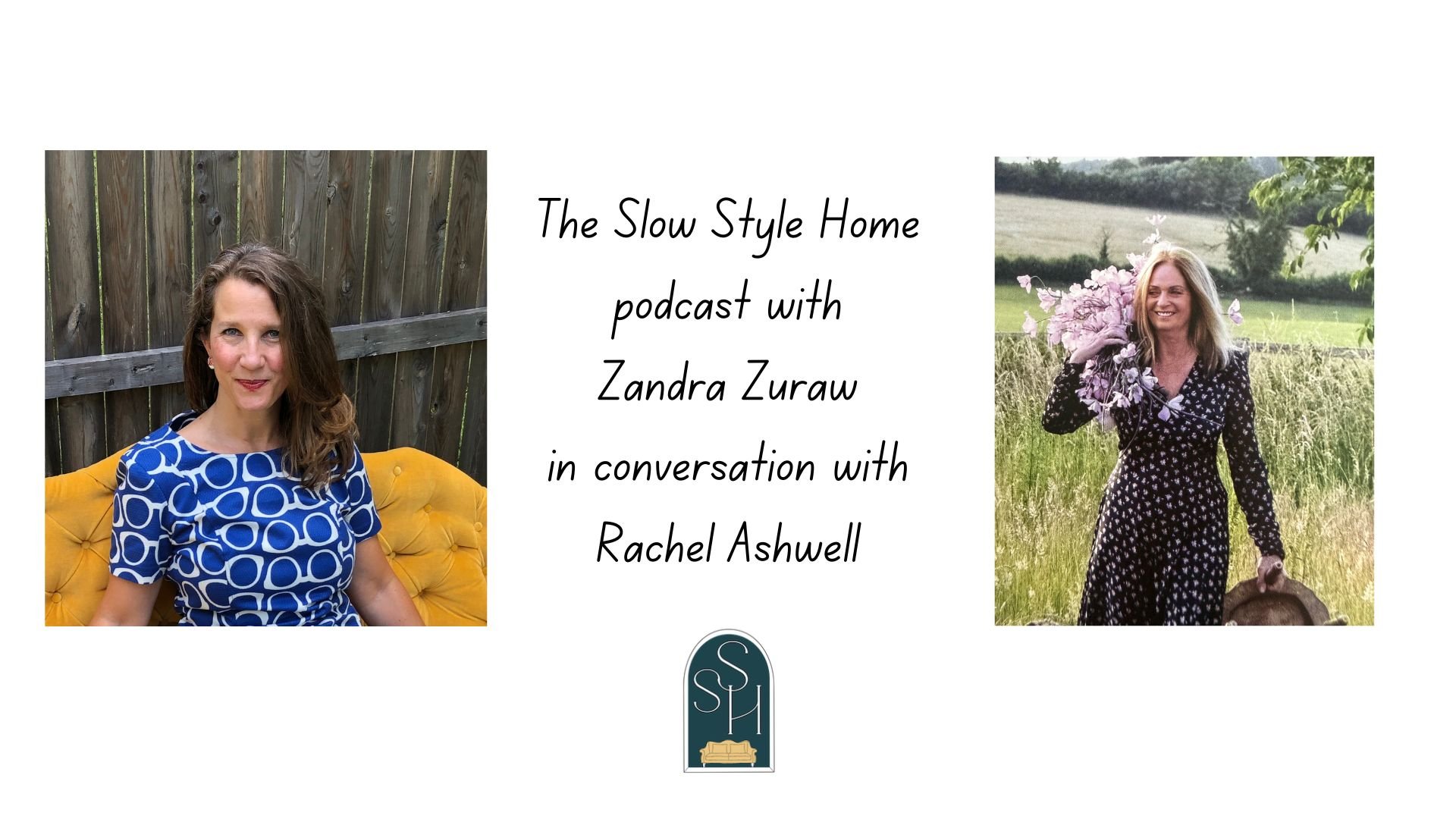
The Beautiful, Incomplete Room with Shabby Chic’s Rachel Ashwell
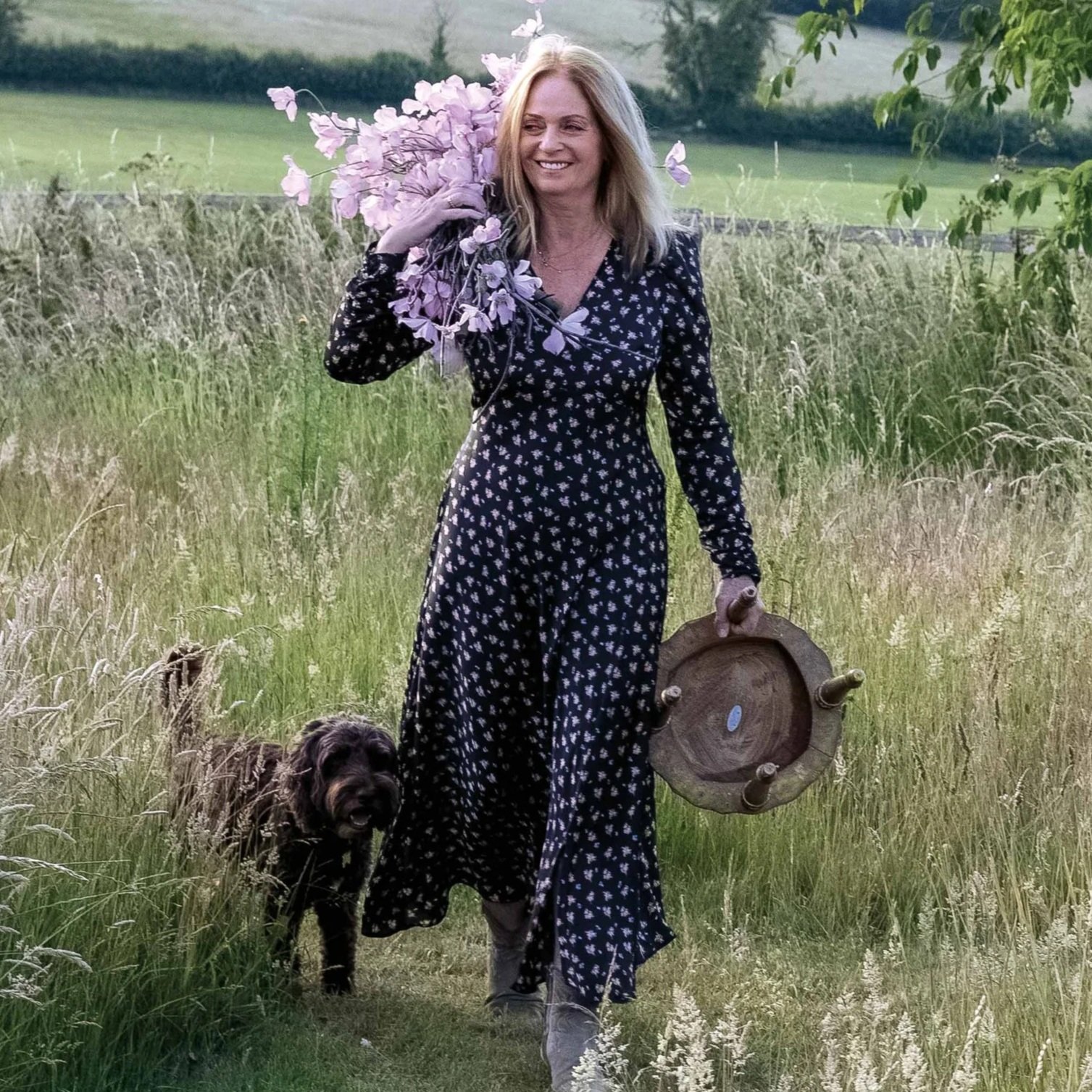
In this episode, I had the pleasure of sitting down with Rachel Ashwell, and what stayed with me most wasn’t just her iconic aesthetic; it was her mindset. We talked about her move back to the English countryside, her need for the rhythm of the seasons, and how she approaches her home as something always evolving, never finished. From embracing “leftovers” and layering pieces with history, to letting go of perfection and even her own hesitation around bold choices, she reminded me that a home isn’t about getting it right, it’s about letting it reflect who you are in the moment… and giving yourself permission to keep changing.
KEY TAKEAWAYS
Rachel Ashwell: The Woman Who Changed How We See “Worn”
I sat down with Rachel Ashwell, and yes, she really is as thoughtful and grounded as you’d hope. We talked about the roots of her now-iconic philosophy: that old, worn, well-made things aren’t just acceptable… they’re beautiful. That idea alone cracked open a whole new way of living for so many of us.
But what struck me most? Even after decades of defining a style, she’s still evolving.
A New Chapter: Leaving LA for the English Countryside
After 40 years in Los Angeles, Rachel felt the pull to return to England, not out of nostalgia, but out of creative necessity.
She talked about needing the rhythm of seasons again. The way winter invites you inward, how spring slowly opens things up, and how that natural cycle fuels creativity. In contrast, the endless sunshine of California started to feel… off.
So she followed that instinct.
Not with a rigid plan, but with curiosity.
She landed in Somerset, in a 400-year-old home she now calls Meadow Manor, without knowing how long she’ll stay. And I love that. There’s no “forever” pressure. Just: this is the chapter I’m in right now.
Don’t Wait: Decorating Is How You Discover Yourself
One of my favorite moments was when we talked about renters and how often people say, “I can’t do anything, it’s not mine.”
Rachel completely rejected that.
Some of her happiest homes were rentals. There’s a lightness to impermanence. A freedom. And more importantly, it’s a chance to figure out who you are through your surroundings.
You don’t wait until the “perfect” house.
You start now.
The Myth of the Finished Home
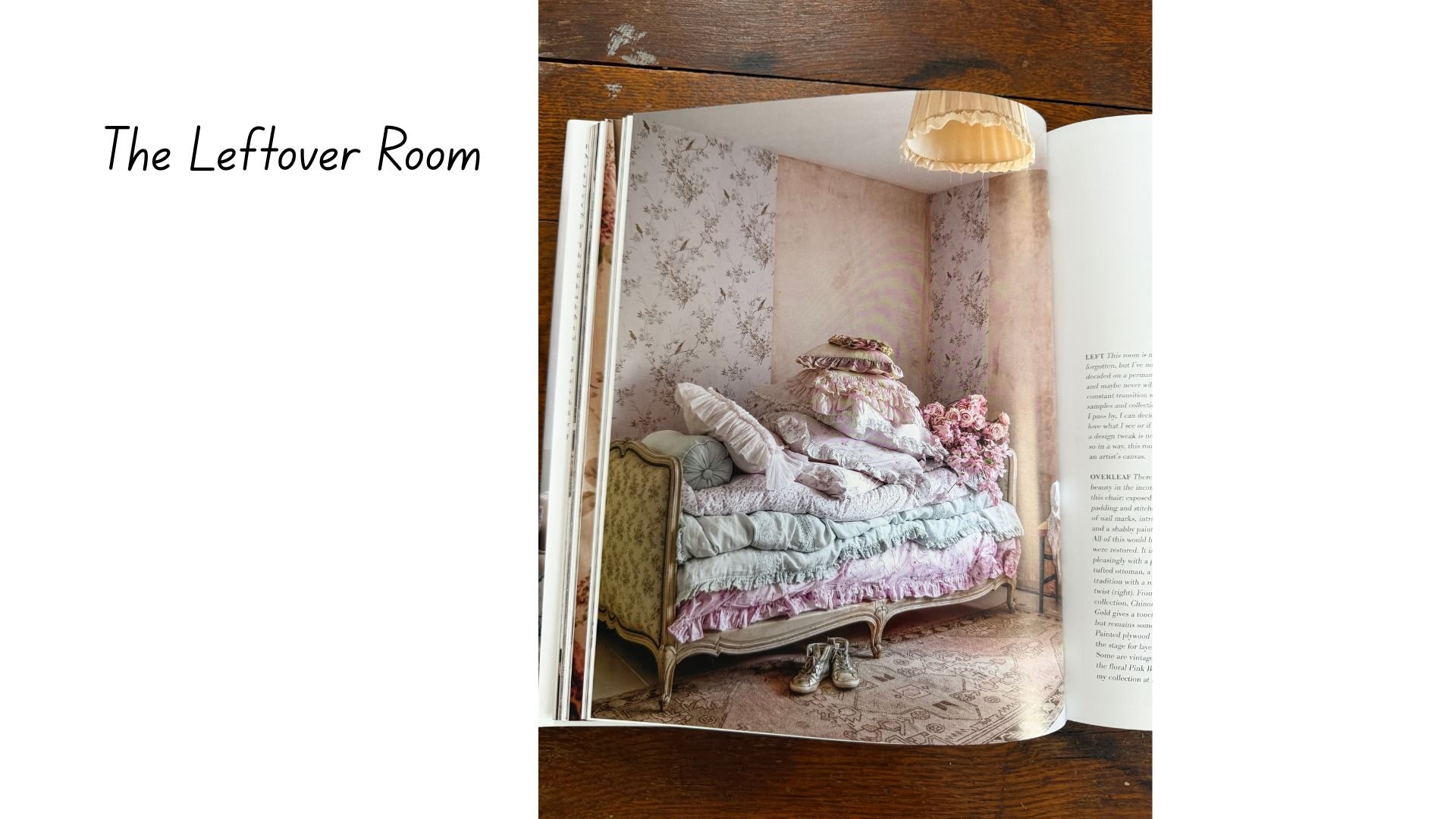
Rachel’s entire house is a lesson in incompleteness and why that’s a good thing.
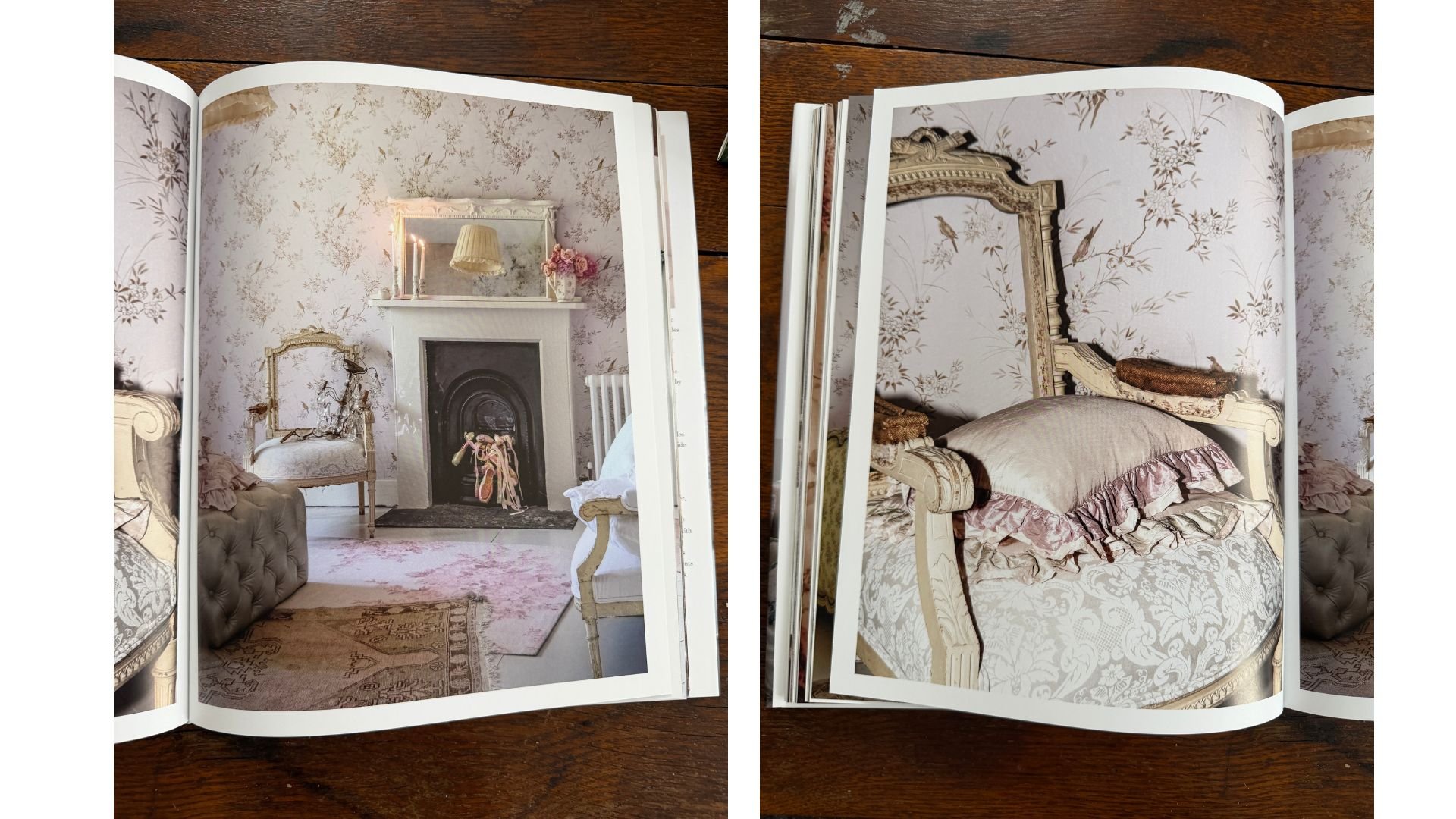
She has a literal “leftover room” that was supposed to be a bathroom. Instead, it’s filled with pieces in transition:
A chair without a finished back
A chandelier casually resting on top of it
Wallpaper that stops halfway, revealing beautiful raw plaster
And yet—it’s stunning.
Nothing feels precious or untouchable. Everything can move, evolve, shift.
She described it as a kind of calm: when things aren’t finished, there’s always room for more. One more layer, one more idea, one more moment of creativity.
The Snug: A Case for Small, Layered Spaces
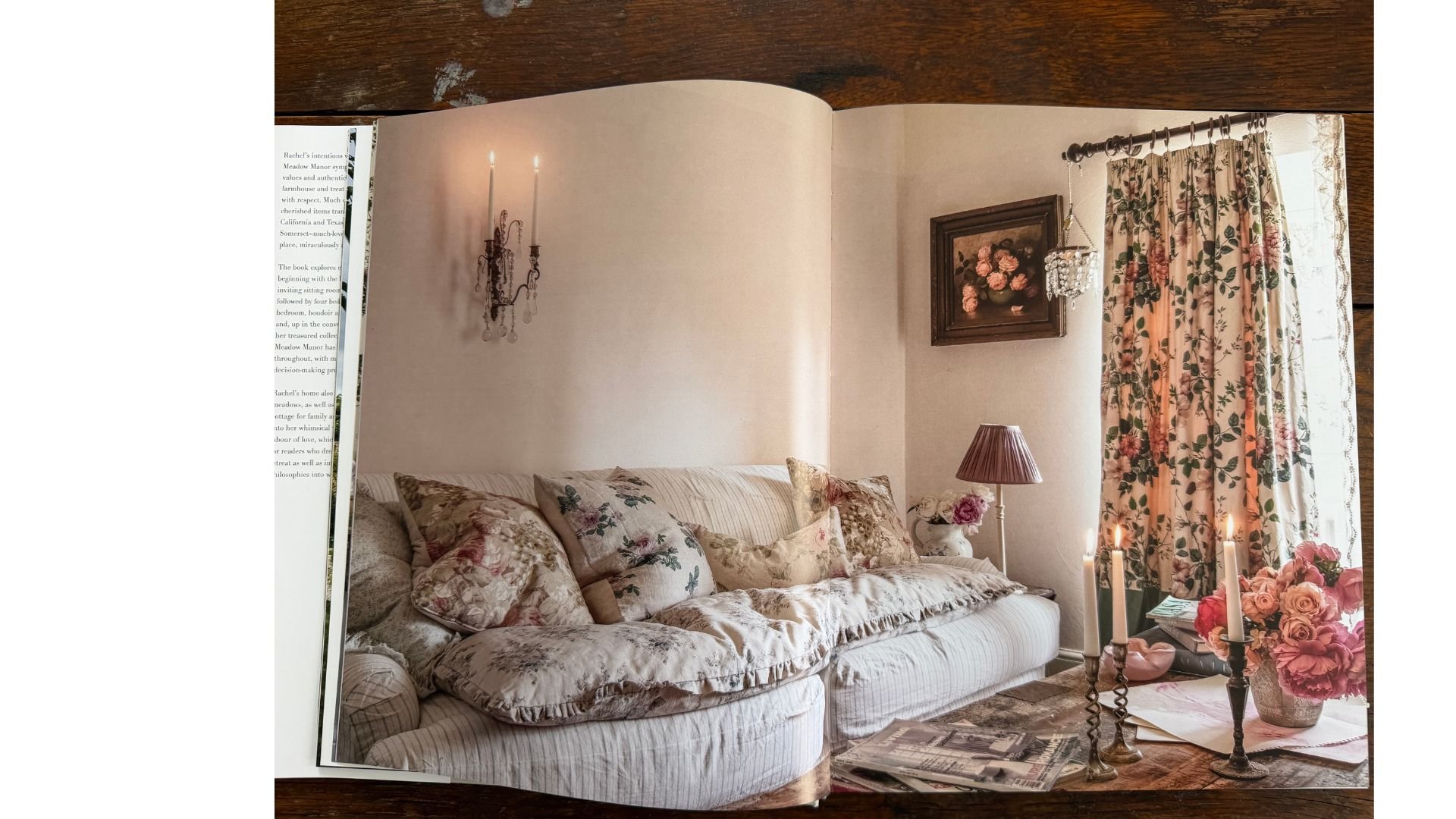
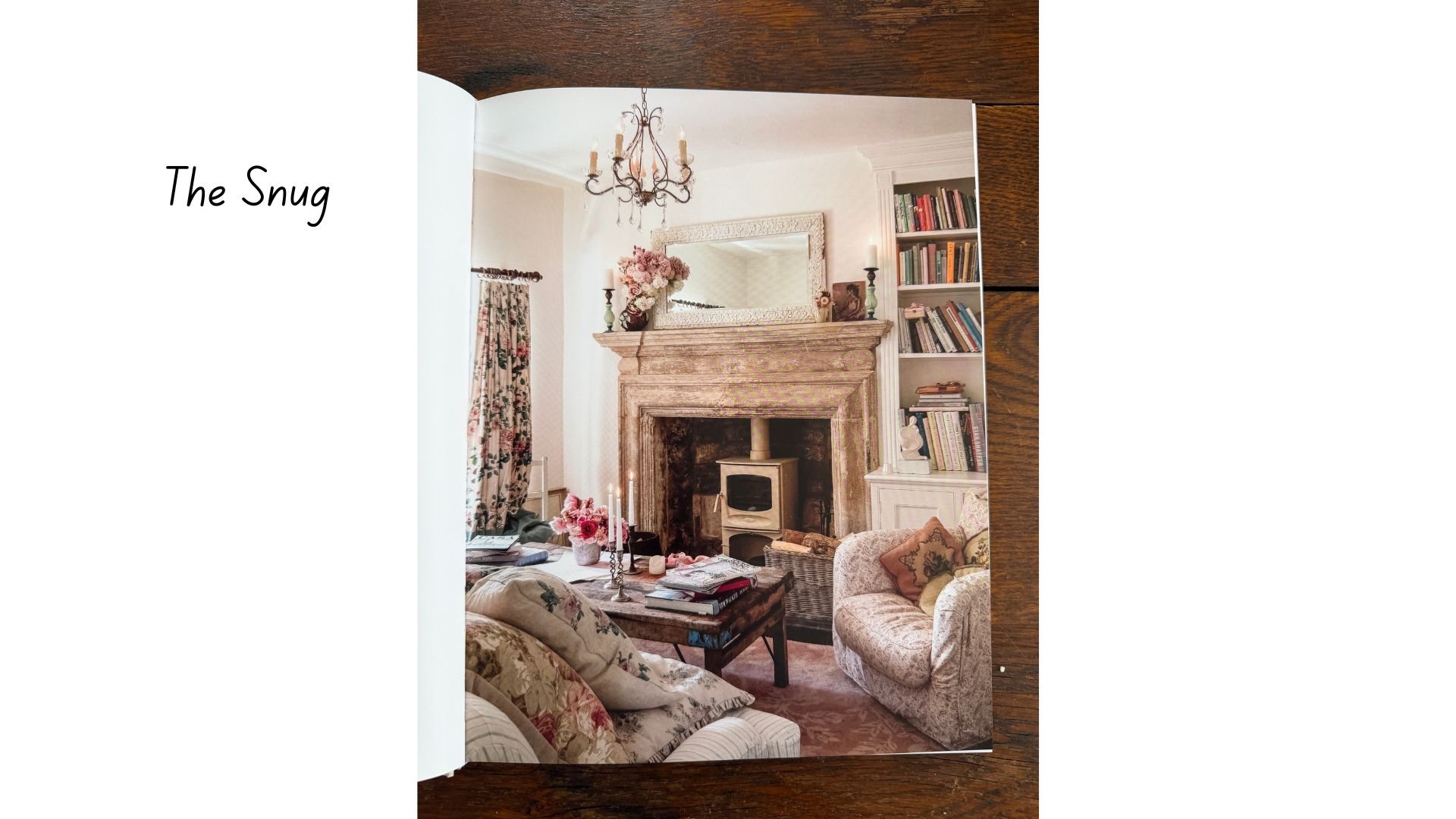
We talked about her “snug,” a small, cozy room that perfectly argues against open floor plans.
It’s layered, personal, and full of life:
A soft fireplace and built-in bookcase
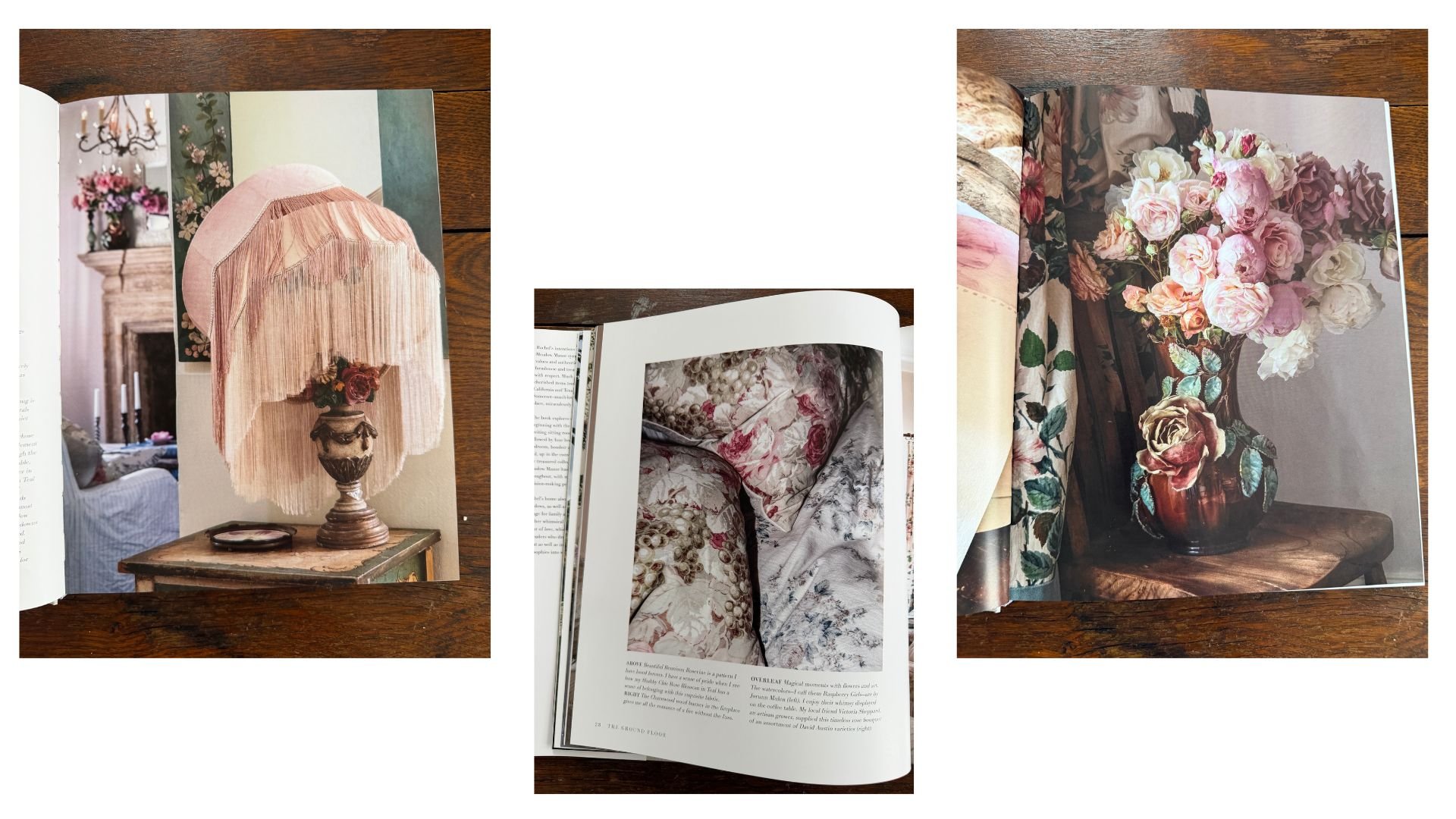
A floral, almost “leftover” mix of textiles from past projects
A custom paint color—a diluted rose wash with a soft white cap at the top of the walls
Curtains from Texas that were too short, extended with an added fabric band at the bottom
Even the teal paint she tried first? She changed it. Not a failure, just part of the process.
This room is also her laboratory. She tests ideas here, moves pillows constantly, brings in flowers from the garden depending on what’s blooming. Nothing is static.
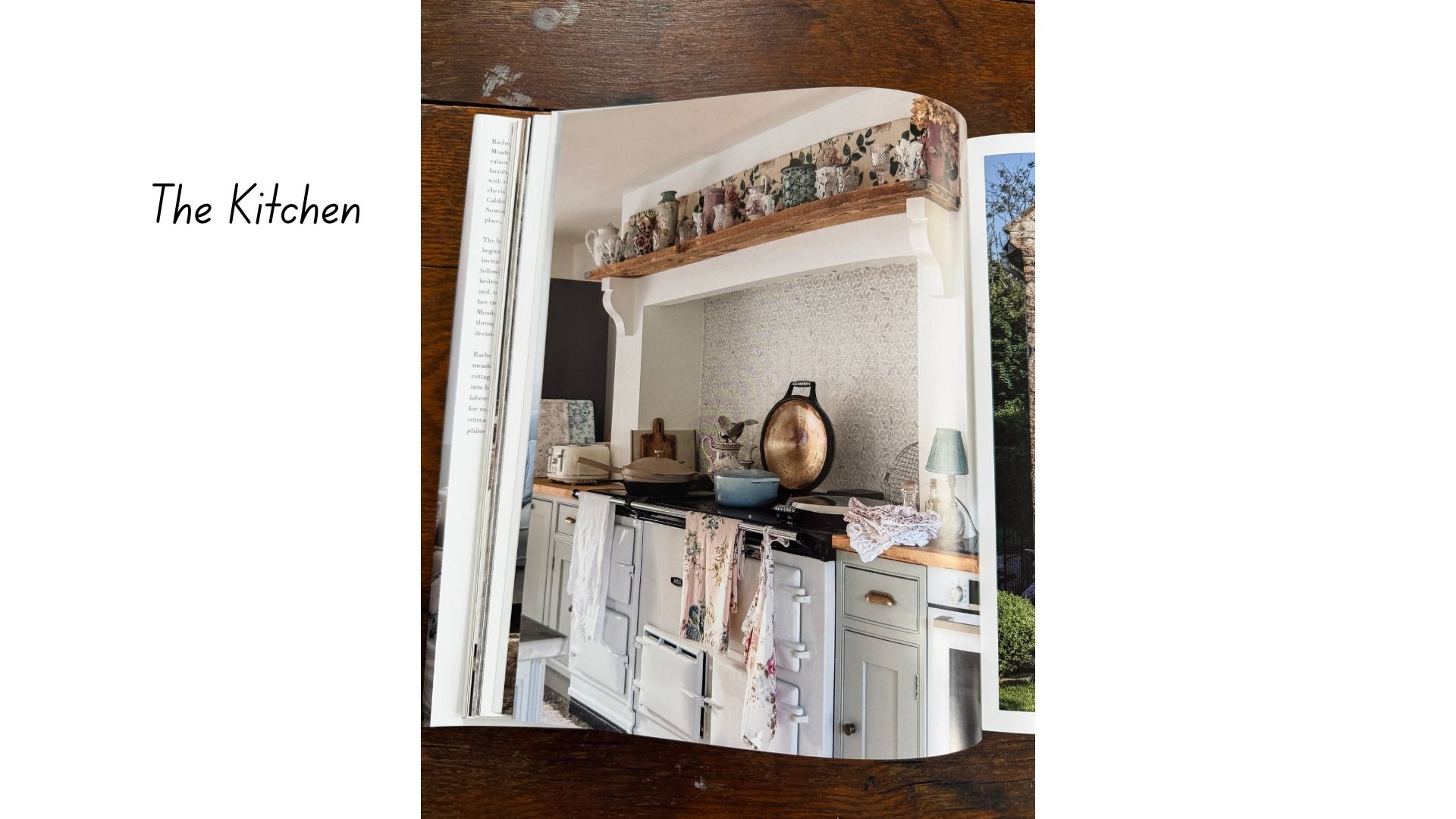
Kitchens Should Feel Like Living Rooms
Her kitchen might be my favorite example of “slow style” in action.
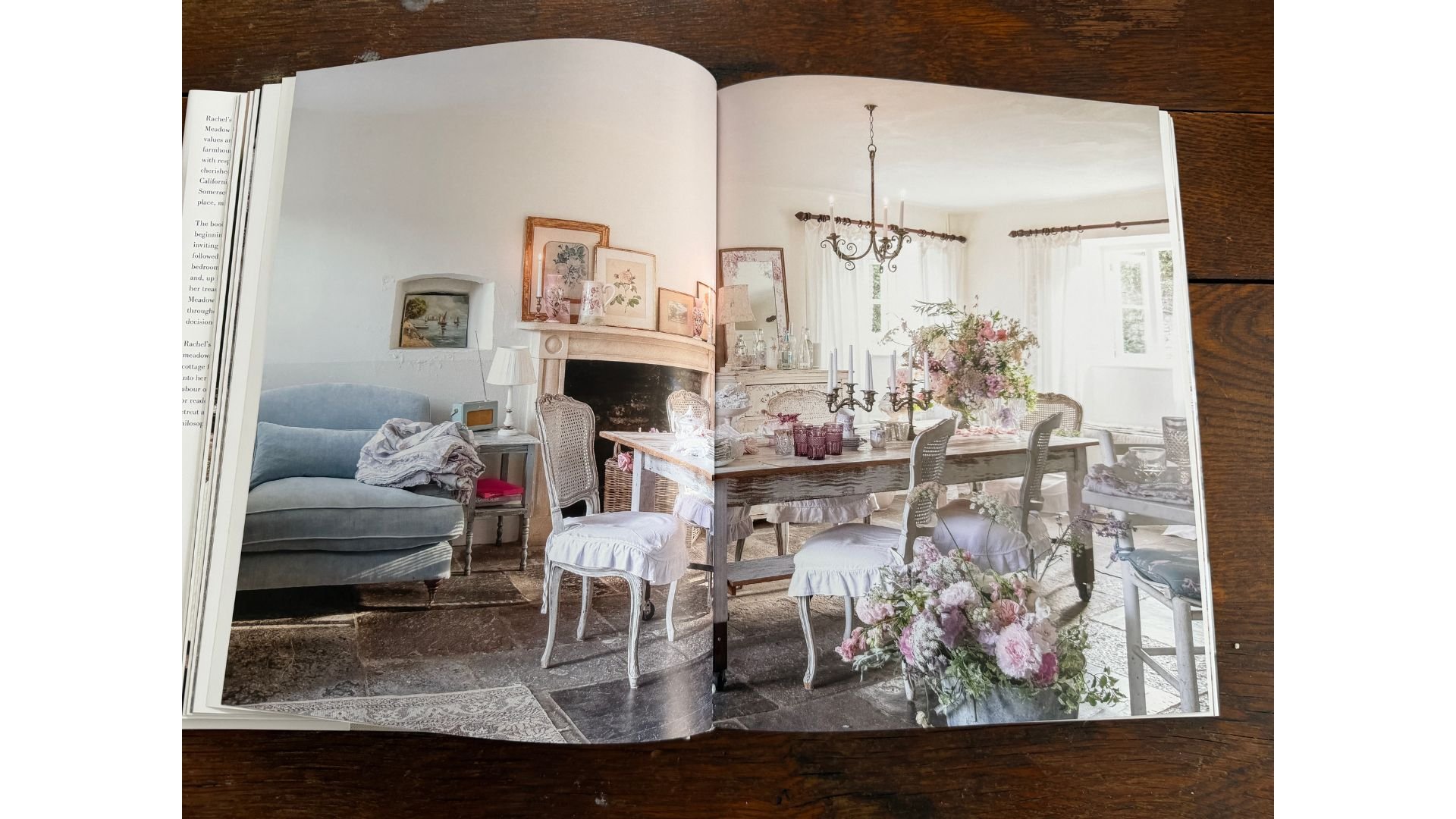
Instead of a sterile, hyper-designed space, it’s warm and layered:
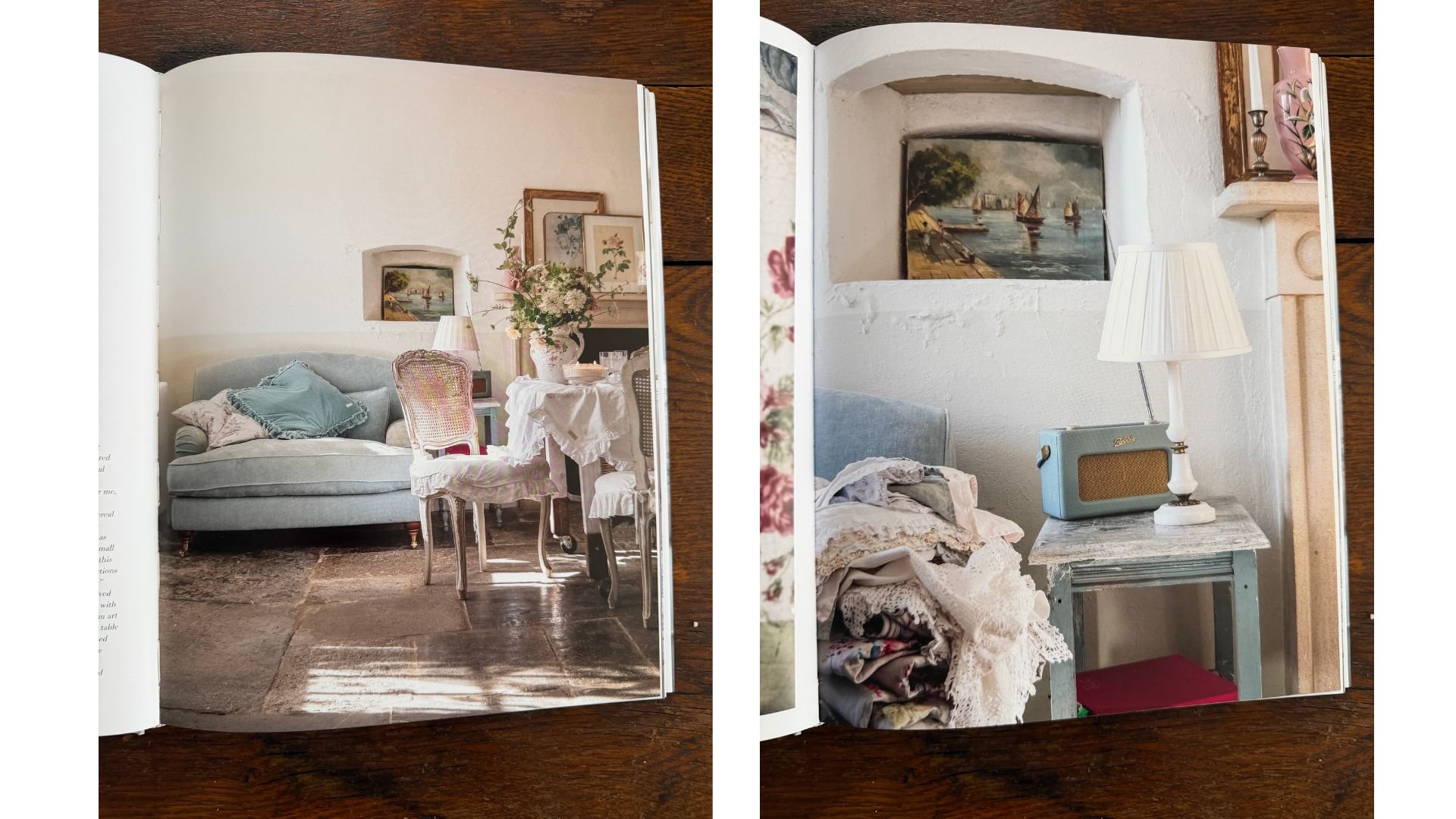
A sofa and table for gathering
Lamps and artwork—not just overhead lighting
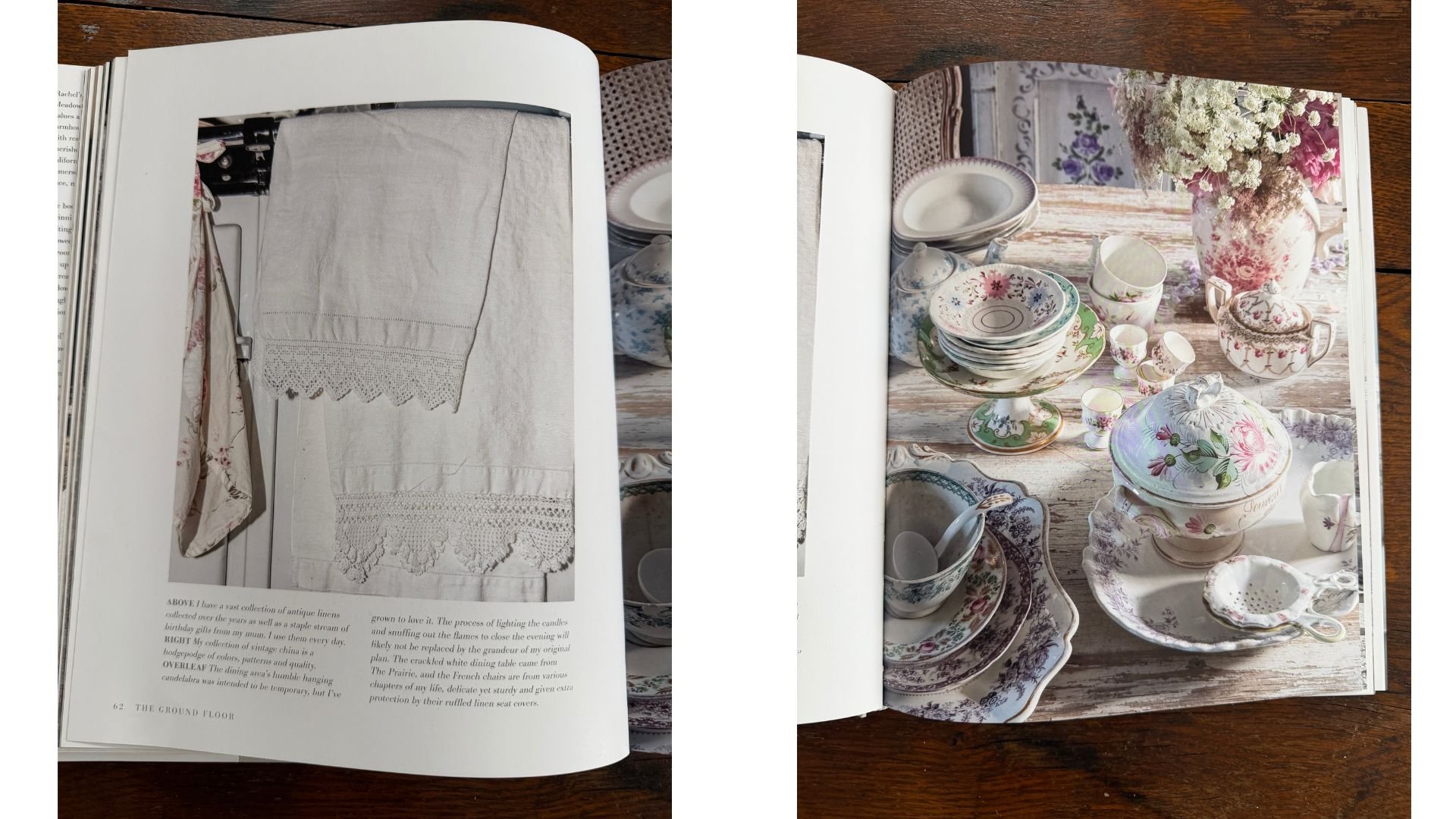
A mix of vintage dishware that doesn’t match (and doesn’t need to)
Hand-me-down linens from her mother, full of texture and history
And at the center: an Aga stove.
Not just an appliance, but a philosophy. Traditionally always on, slow to heat, and rooted in a different pace of living. Even after converting it to electric, it still takes time, and that’s the point.
It asks you to slow down.
Layering for Real Life (Not Perfection)
Rachel’s approach to upholstery is a perfect example of beauty meeting practicality.
Her signature white slipcovered sofas? Still there. But now:
She adds pillow toppers—long cushions you sit on that can be removed and washed
Layers fabrics, patterns, and textures so nothing feels too precious
Designs for real life, including muddy dogs and everyday mess
It’s not about keeping things perfect.
It’s about making them livable and still beautiful.
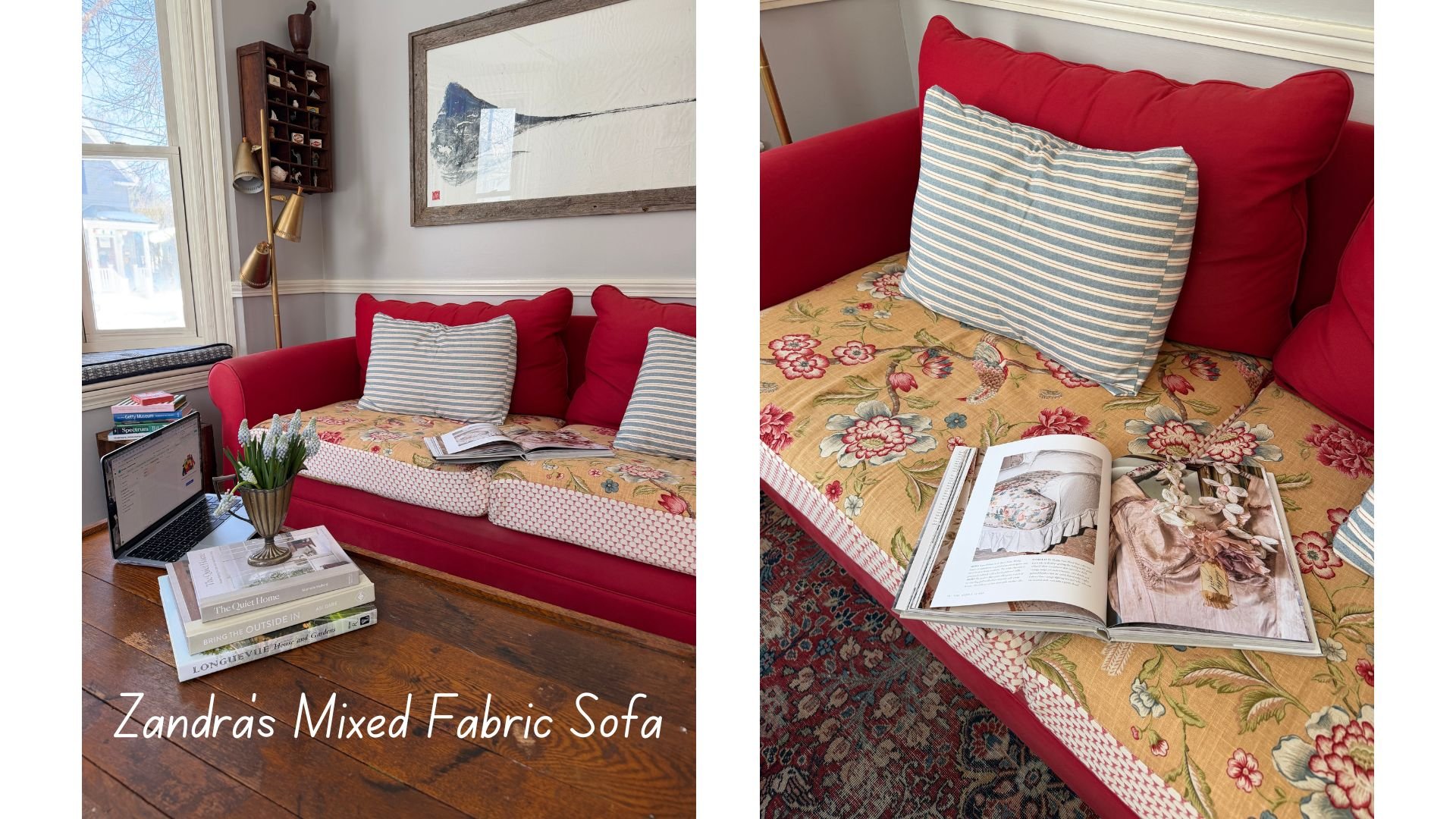
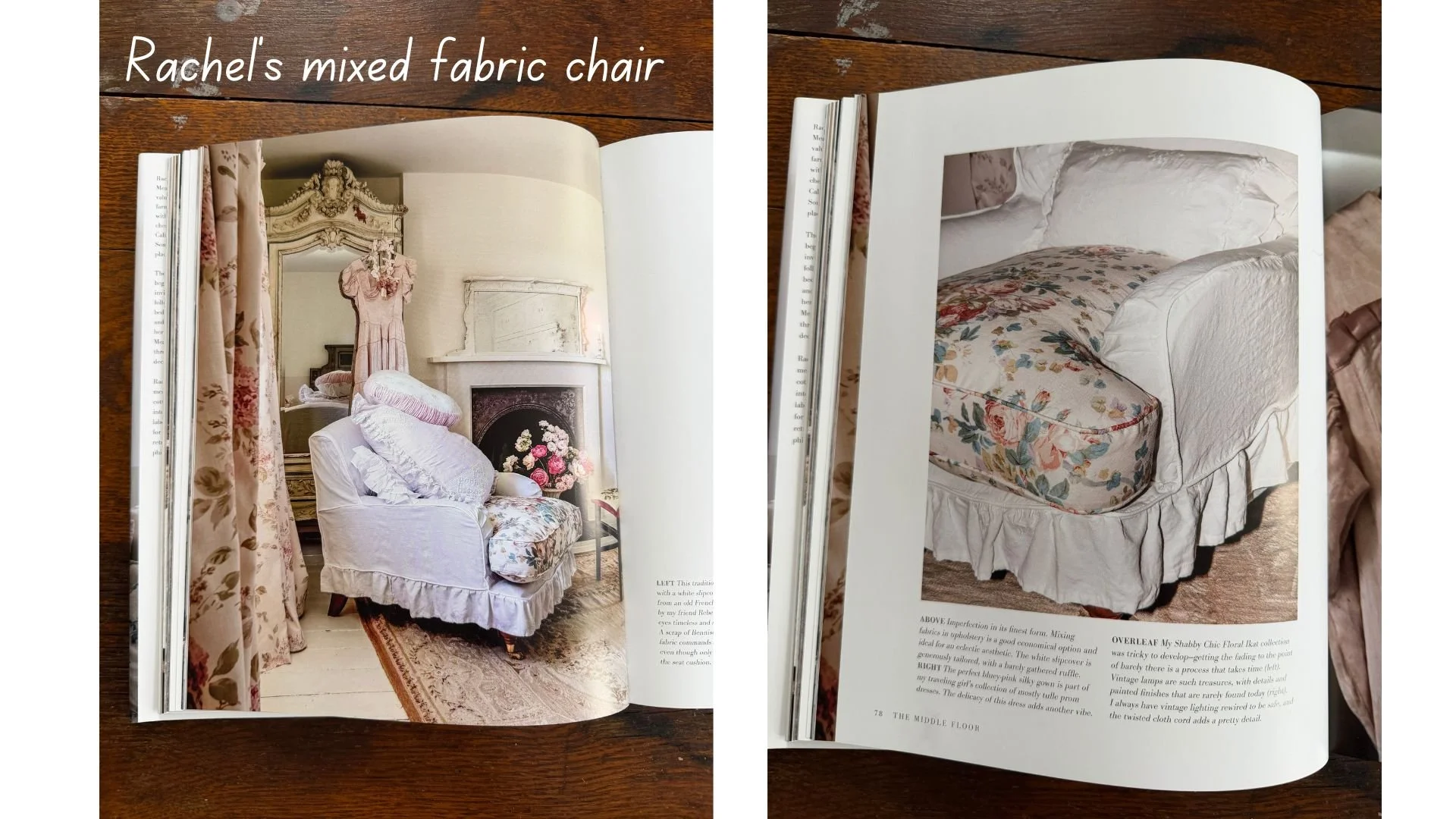
A Smarter Way to Use “Expensive” Fabric
One detail I loved: how she uses high-end fabric.
Instead of covering an entire chair in something expensive like Bennison fabric, she’ll:
Use a simple base (like an old linen sheet)
Add just a small section of the luxury fabric—on a seat or cushion
You get the richness, the pattern, the depth… without the cost or the overwhelm.
It’s a reminder that you don’t need more, you just need intention.
Style Categories (And Why They Don’t Matter)
Rachel has been labeled the queen of “shabby chic,” but she pushed back on rigid definitions.
To her, it’s not about rules, it’s about juxtaposition:
Shabby + chic
Humble + fancy
Timeworn + elegant
The problem with style categories isn’t that they exist; it’s when they become prescriptive. When they tell you what you can’t do.
Her version leaves room for interpretation, evolution, and personal expression—even across generations.
The Beauty of Incompleteness
At the end of our conversation, Rachel said something I haven’t stopped thinking about:
Her love of incompleteness brings her calm.
Because when something isn’t finished, there’s always space for more:
One more layer
One more idea
One more moment
And that, to me, is the heart of it all.
A home isn’t something you complete.
It’s something you keep living into.
Until Next Time
-Zandra