
Nature Knows Where Your Sofa Goes (Stop Overthinking It) with Abi Dare

Sitting down with Abi Dare to talk about her new book, Bring the Outside In, felt like having someone quietly turn on a light in rooms I thought I already understood. We started with the idea of nature in our homes, but very quickly moved far beyond the usual advice about adding more plants or maximizing daylight. Abi shows us how the landscapes we love can become a roadmap for every decision we make — from color palettes pulled from forest canopies and sunsets, to the mix of textures that make a space feel layered and alive. We explored curving shapes, reclaimed materials, and why a sleek piece of glass or metal can still feel deeply connected to the natural world. And then we went even deeper.
We talked about prospect and refuge — that powerful instinct to feel protected while still being able to look out — and how it explains everything from our love of restaurant booths to the magic of a window seat. We discussed mystery and enticement, the importance of what you glimpse from one room to the next, and why transitions like hallways deserve far more attention than they usually get. My biggest takeaway? When you let nature lead, the pressure to “get it right” disappears. The choices start to feel intuitive. Personal. Grounded. Let nature do the heavy lifting.
KEY TAKEAWAYS
When I sat down with Abi Dare to talk about her new book, Bring the Outside In, I knew we’d be discussing nature.
What I didn’t fully appreciate — until we got into it — was just how far that inspiration can take us.
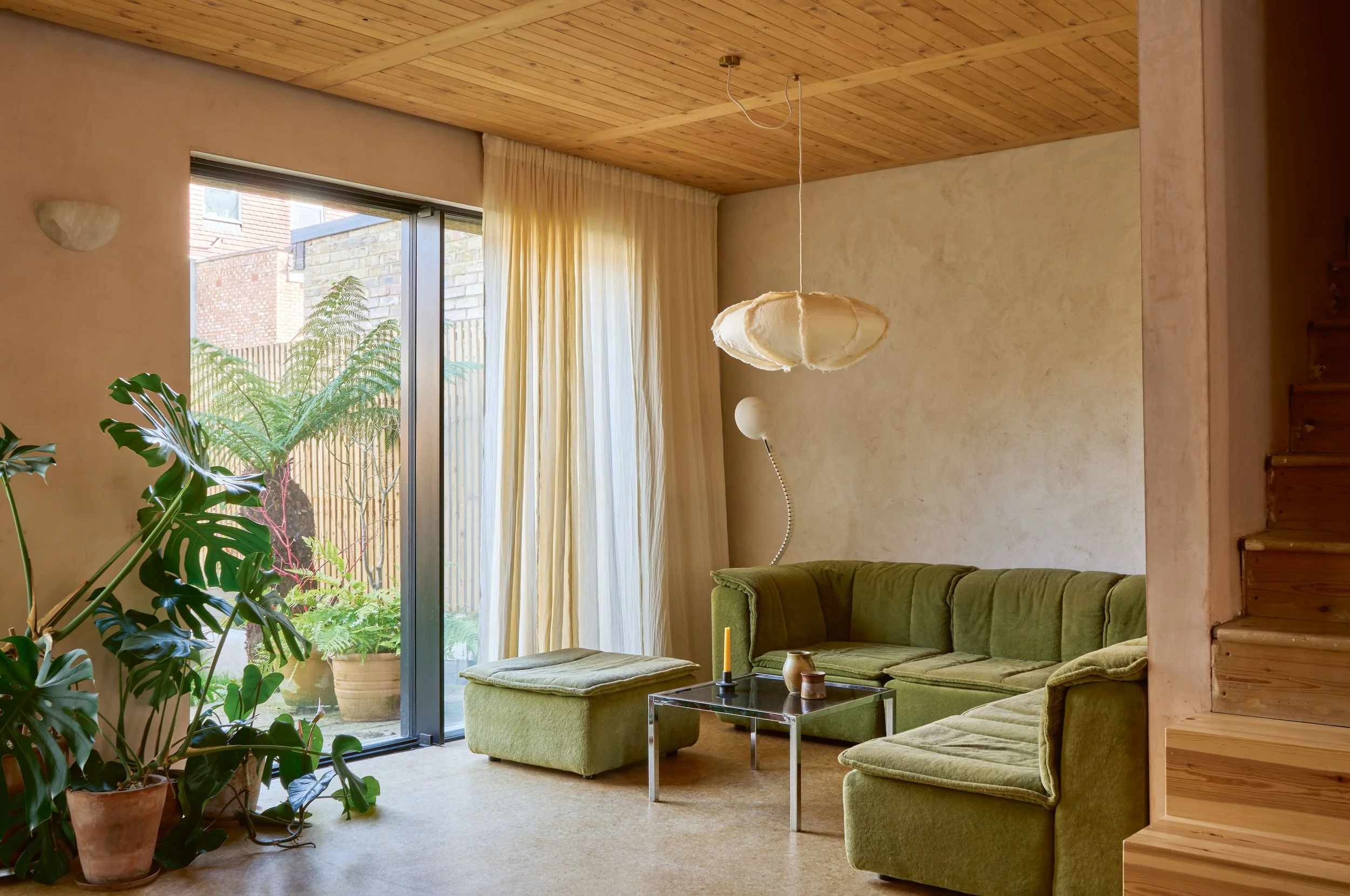
Yes, we talked about plants and natural light. But we also talked about color palettes pulled from sunsets, velvet sofas that echo a forest canopy, reclaimed wood ceilings, curving mirrors, cocoon-like seating, and the ancient instincts that still determine where we most want to sit in a room.
By the end, I was looking at my own house differently.
Let me walk you through the big ideas.
It’s More Than a Houseplant
Houseplants are wonderful. I love them, you love them, we all love them.
But biophilic design goes way beyond putting a fern in the corner.
Abi’s whole message is that nature can become the source material for nearly every design decision you make. If you’ve ever stood in a place you adore — a beach, a trail, a mountain overlook — and wished you could bottle that feeling, you can.
You can translate it into color, shape, texture, materials, and layout.
And once you start doing that, the overwhelm starts to melt away.
A Quick Primer on Biophilic Design
Abi breaks biophilic design into three approachable categories:
Nature in the space – literal elements like light, plants, water, natural materials.
Natural analogs – mimicking nature through color, pattern, lighting, artwork, shapes.
Nature of the space – arranging rooms in ways that echo environments humans instinctively love.
That third one? It surprises people. And it might be the most powerful.
We’ll get there.
Borrow Your Color Palette from the Landscape
This part is so freeing.
Instead of staring at a wall of paint chips while a voice in your head whispers, What if I choose wrong? — Abi suggests starting with a place that already moves you emotionally.
A favorite vacation photo.
A hike.
A sunset you can’t forget.
Nature already solved the color puzzle.
Abi gave three examples I loved:
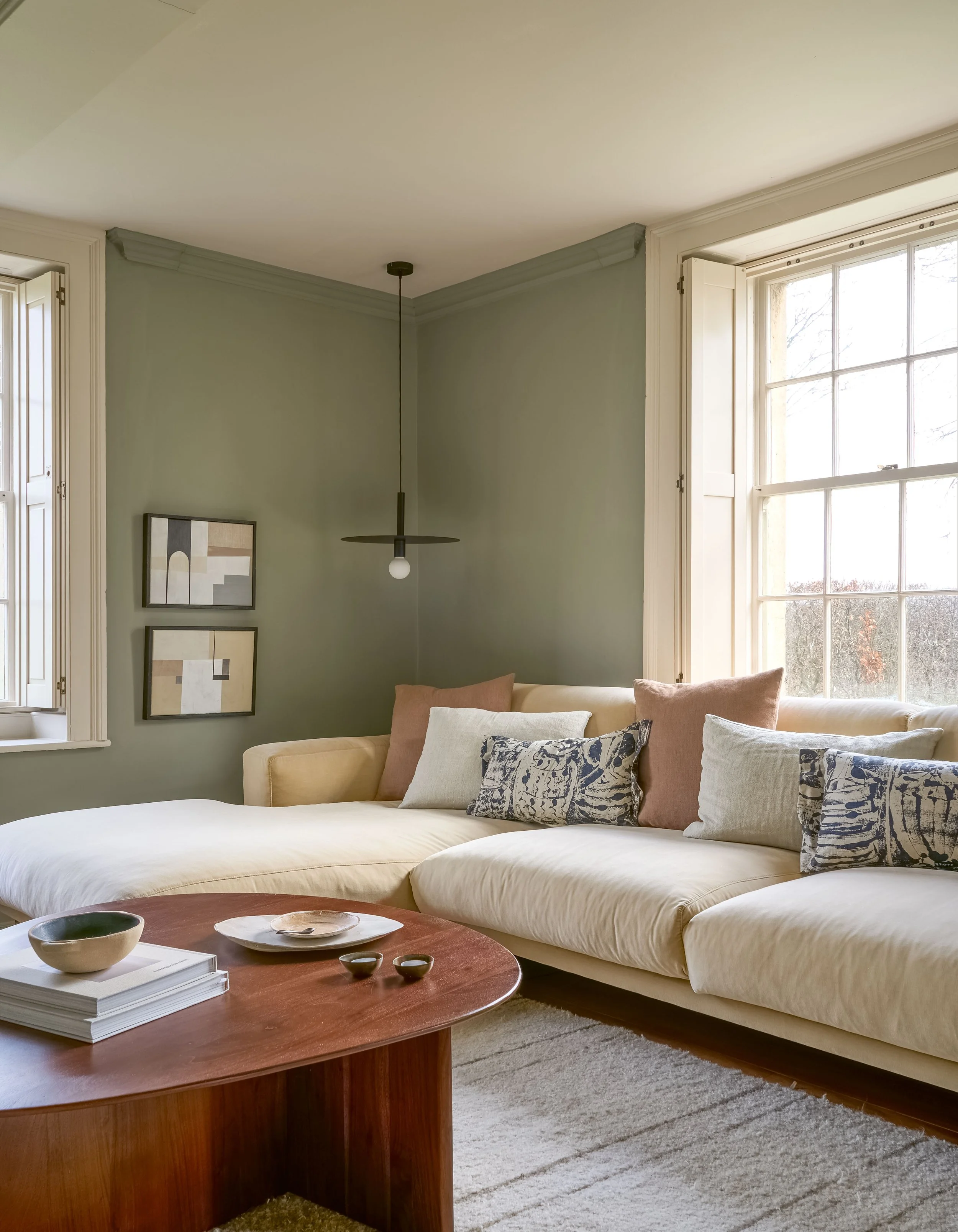
Tonal: a forest canopy with hundreds of greens layered together.
Complementary: yellow sand against a blue sky at the beach.
Analogous: the blues, purples, and magentas of a fading sunset.
None of these combinations feel jarring because we see them in the natural world all the time.
They feel right in our homes for the same reason.
Texture: Nature Never Uses Just One
Think about standing in a forest.
You see glossy leaves, rough bark, soft soil, filtered light.
Contrast is everywhere.
Abi emphasized that we should be layering that same variety indoors. A polished stone floor might sit next to a velvet sofa. A wood ceiling might hover above lime-washed walls. Add in metal or glass and suddenly the room feels sophisticated, not rustic.
One of the homes we discussed had reclaimed floorboards installed overhead, velvet upholstery underfoot, and a smoky glass coffee table that gave the whole space an urban edge.
It was biophilic — but not cliché.
Curves, Draping Shapes, and the Absence of Right Angles
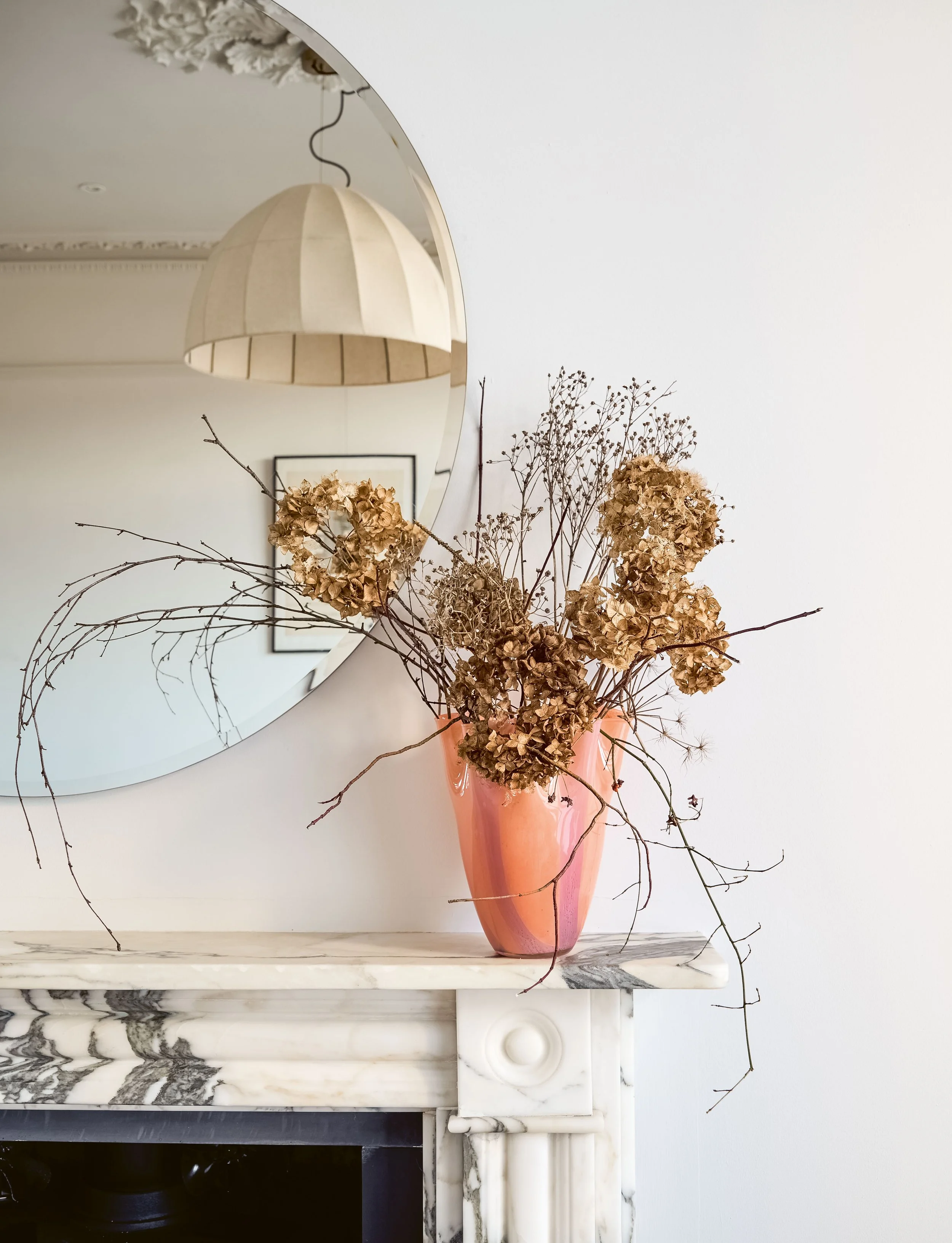
In another example, we looked at a living room filled with sculptural, almost draped forms. A mirror that looked like fabric hanging over a line. A sofa with rounded edges. A boldly striped marble coffee table.
Very contemporary. Very personal.
And yet — unmistakably rooted in nature, where hard right angles are rare.
Softening the Hardest Working Room in the House
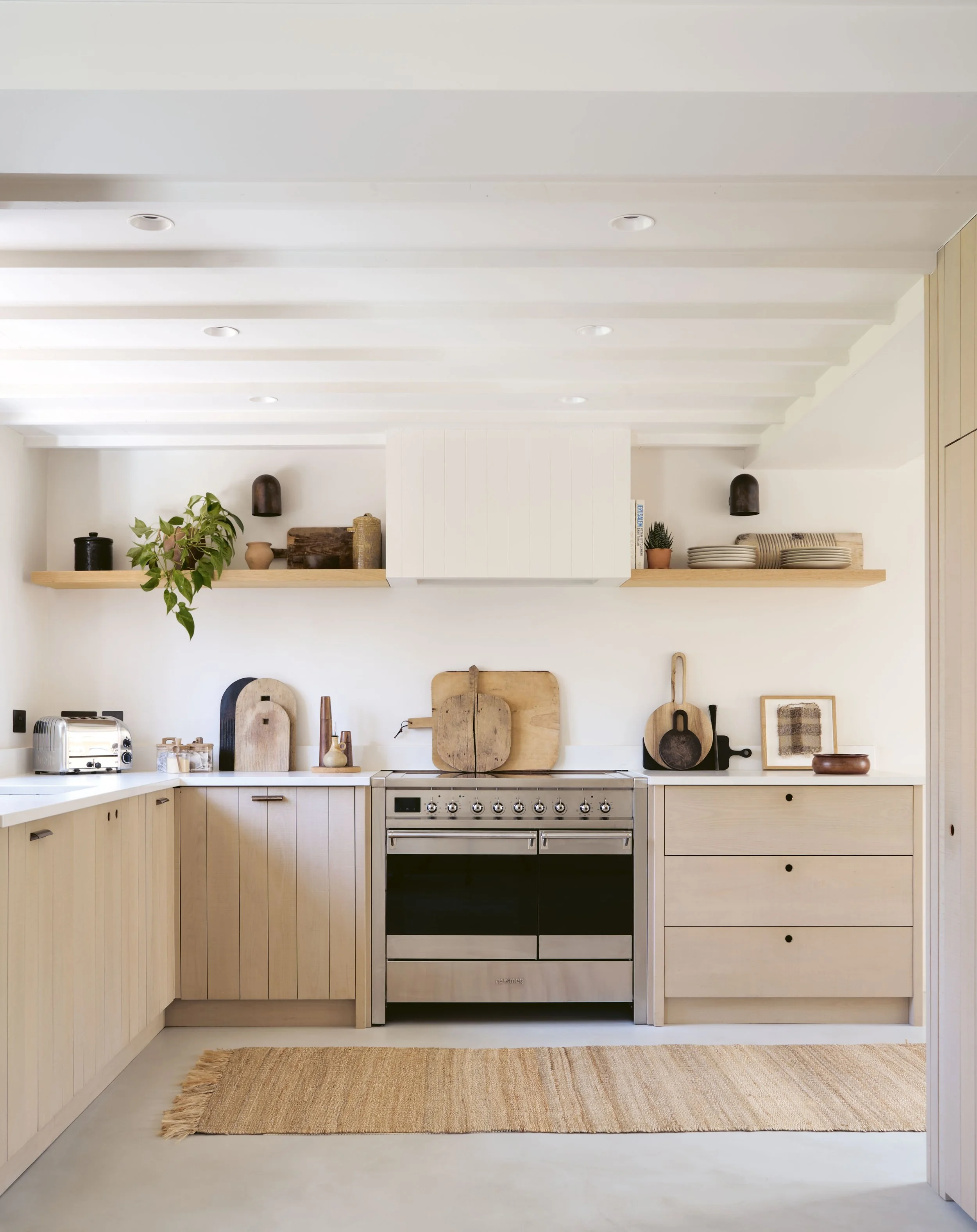
Kitchens are tough. They’re inherently linear, full of cabinetry and sharp edges.
But we saw a fantastic example where small moves made a big difference: a muddy mossy paint color, a conical rattan pendant, a fabric curtain disguising lower storage.
None of it required a renovation.
Yet the room felt warmer, gentler, more human.
Prospect & Refuge: Why You Always Want the Booth
This is where Abi and I both got fired up.
The idea comes from our earliest days as humans living along forest edges. We wanted protection behind us and a clear view outward to scan for opportunity or threat.
Sound familiar?
It’s why, in a restaurant, we’ll pick the banquette along the wall every time.
At home, it might mean:
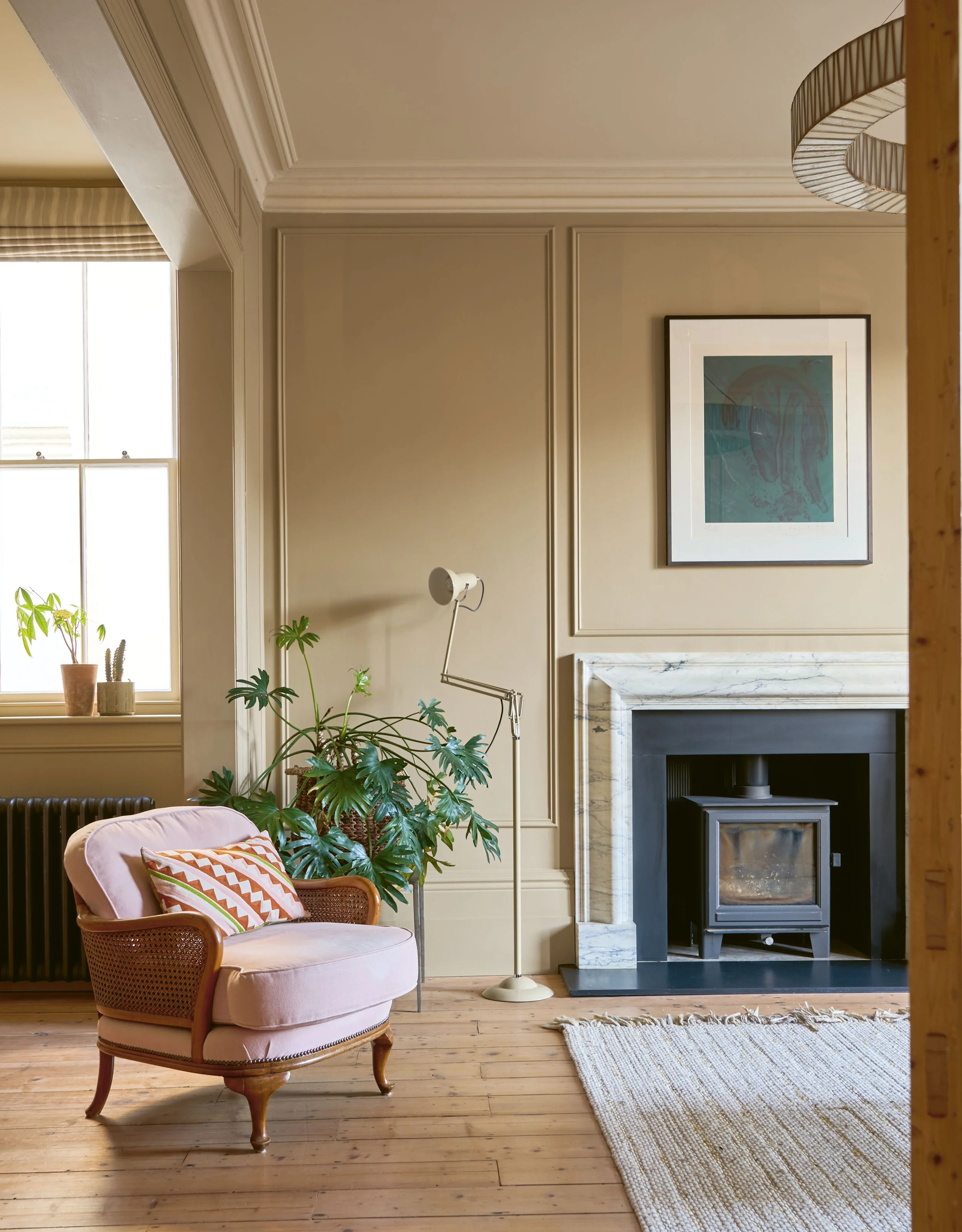
a chair tucked into a corner facing the door
a curved sofa wrapping around you
a window seat high above the street
subtle separations within open plans
We want to feel sheltered and connected.
When a space offers both, we relax instantly.
The Power of a Nest
One of my favorite images was a high-rise apartment where the homeowner turned a deep sill into a perch with cushions, blankets, and candles.
No construction. Hardly any expense.
But psychologically? Transformative.
It became an eagle’s nest — protected, elevated, with a sweeping view of the city below.
Prospect and refuge in perfect balance.
Mystery & Enticement: Make Me Want to Walk Further
Humans love discovery.
A winding path. A bend in the garden. The suggestion that something lovely is just out of sight.
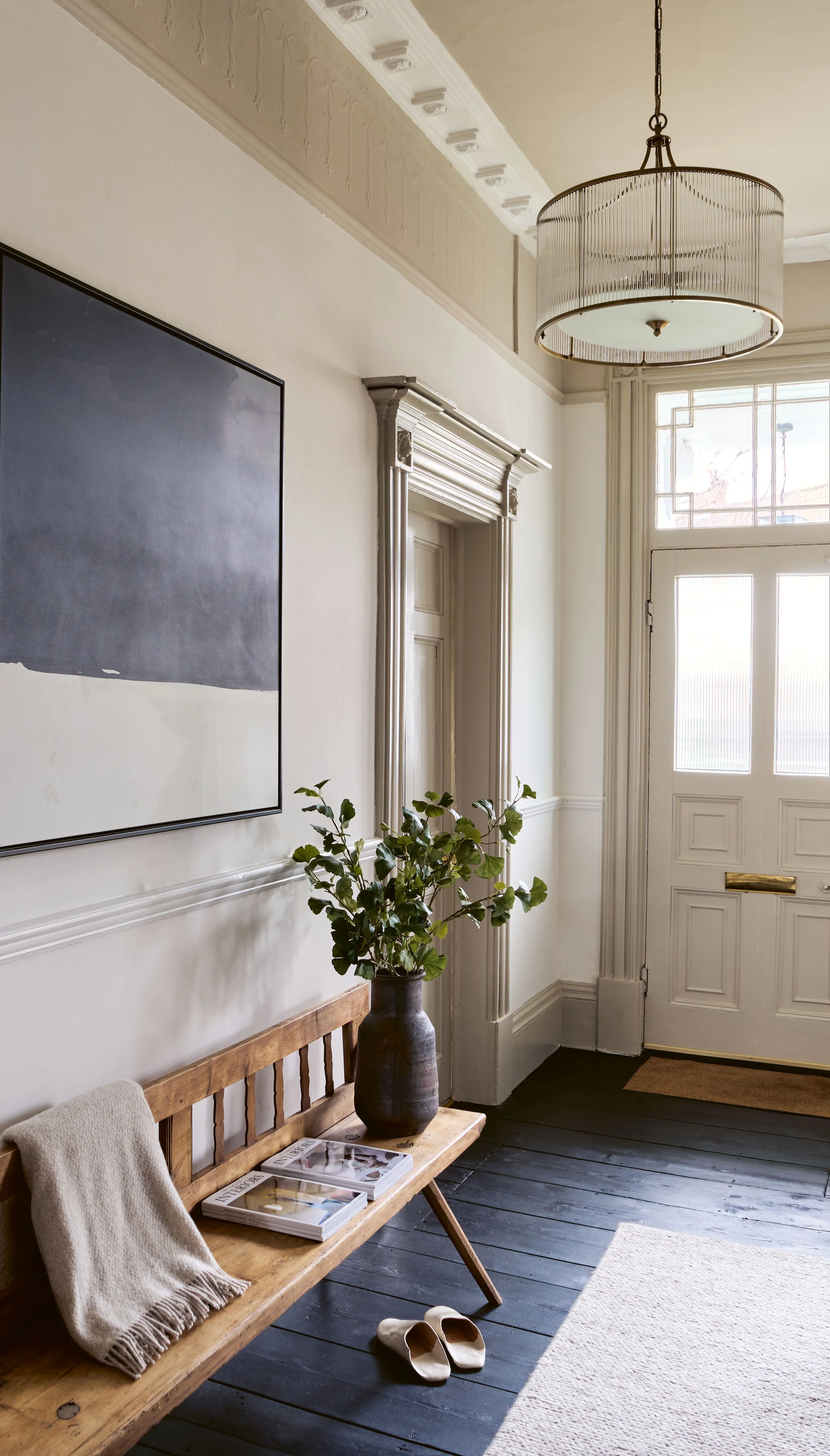
At home, that might be a glimpse through a doorway toward a beautiful console, an artwork, a plant, a wash of inviting color.
Not the side of a wardrobe.
Think about the journey you’re creating from room to room. Are you pulling yourself forward — or putting up visual stop signs?
Don’t Forget the Hallway
We both admitted this is often the last place we deal with.
But it’s the first experience of home.
Shoes, coats, clutter — they create stress before you’ve even taken a breath. A bit of intention here can completely shift how it feels to arrive.
Let Nature Do the Heavy Lifting
If there’s one thing Abi makes beautifully clear, it’s this:
You don’t have to invent a perfect home from scratch.
The answers already exist in the landscapes you love.
Steal their palettes.
Borrow their textures.
Echo their shapes.
Recreate their sense of safety and invitation.
Your rooms will start to feel less forced — and much more like you.
Until Next Time
-Zandra
Links Mentioned in Episode
Photography by Tiffany Grant-Riley © Ryland Peters & Small