In this solo episode, I cover the fourth skill of the Slow Style Framework, the approach behind my book Slow Style Home (Gibbs Smith, 2025). The first three skills are Envision, Experiment, and Execute, and you practice all of them inside your home. Enrich is different. It sends you out into the world to see things, taste things, and notice how other people live and make and gather. Then it helps you bring what you find back home.
The idea at the center of this episode is to bring home the idea, not just the object. When I look around my house, the pieces that came from my experiences out in the world aren't only about the thing itself. Each one carries an idea I picked up somewhere: a way of doing something, a color, a gesture, a feeling about a place. That's what keeps a home feeling like you, because you keep changing.
With your monthly subscription, you'll have access to exclusive, full length episodes, both audio and video. After signing up, you'll receive an email with easy instructions on how to add this premium show to your podcast player (Apple, Spotify, etc). And every week, you'll receive a link to the video version. As you may know, in the audio version, I make a strong effort to describe the designs we're looking at. But if you want to see everything for yourself, you'll want to click the link to the video version we'll be sending you.

This episode is sponsored by Aura House.
Elegant diffusers, clean, natural scents, free of toxins.
KEY TAKEAWAYS
What Enrich means in the Slow Style Framework
Envision, Experiment and Execute get a room to the point where it feels like you. Enrich makes sure it keeps feeling like you. A home that never takes in what you're seeing, learning and falling for starts to feel like it belongs to who you used to be. Enrich is ongoing. There's no finish line.
A gesture can be the idea you bring home
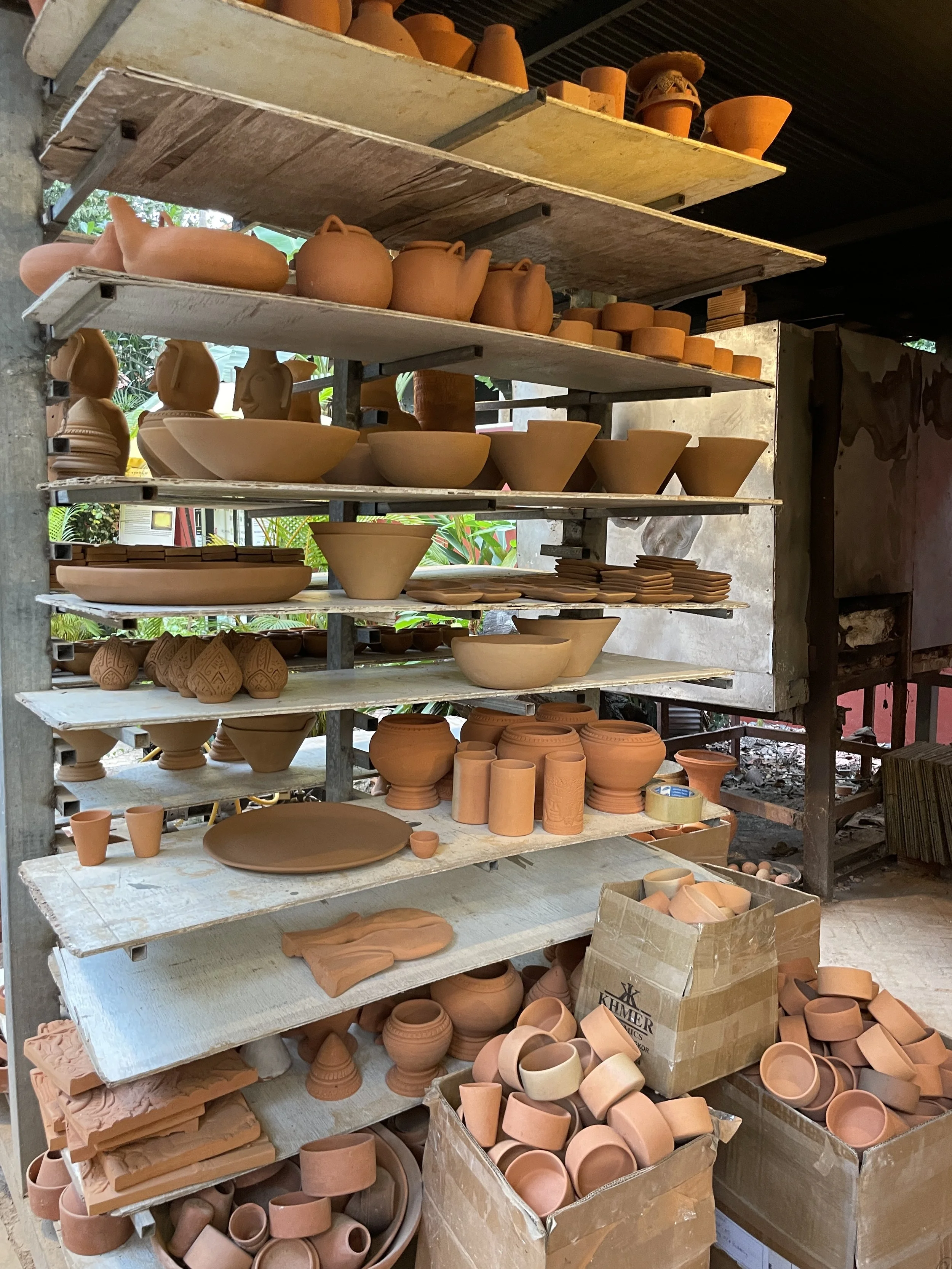
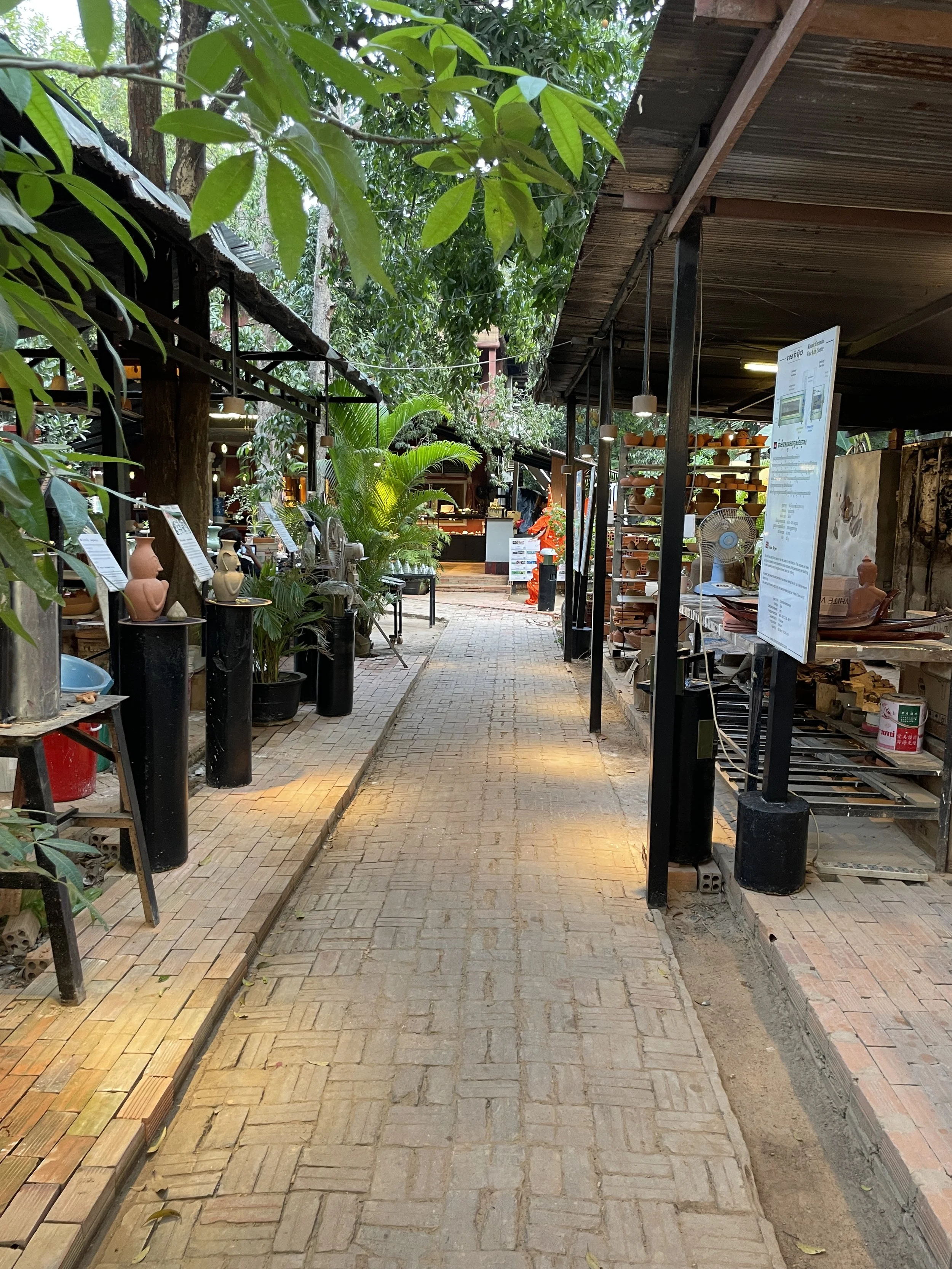
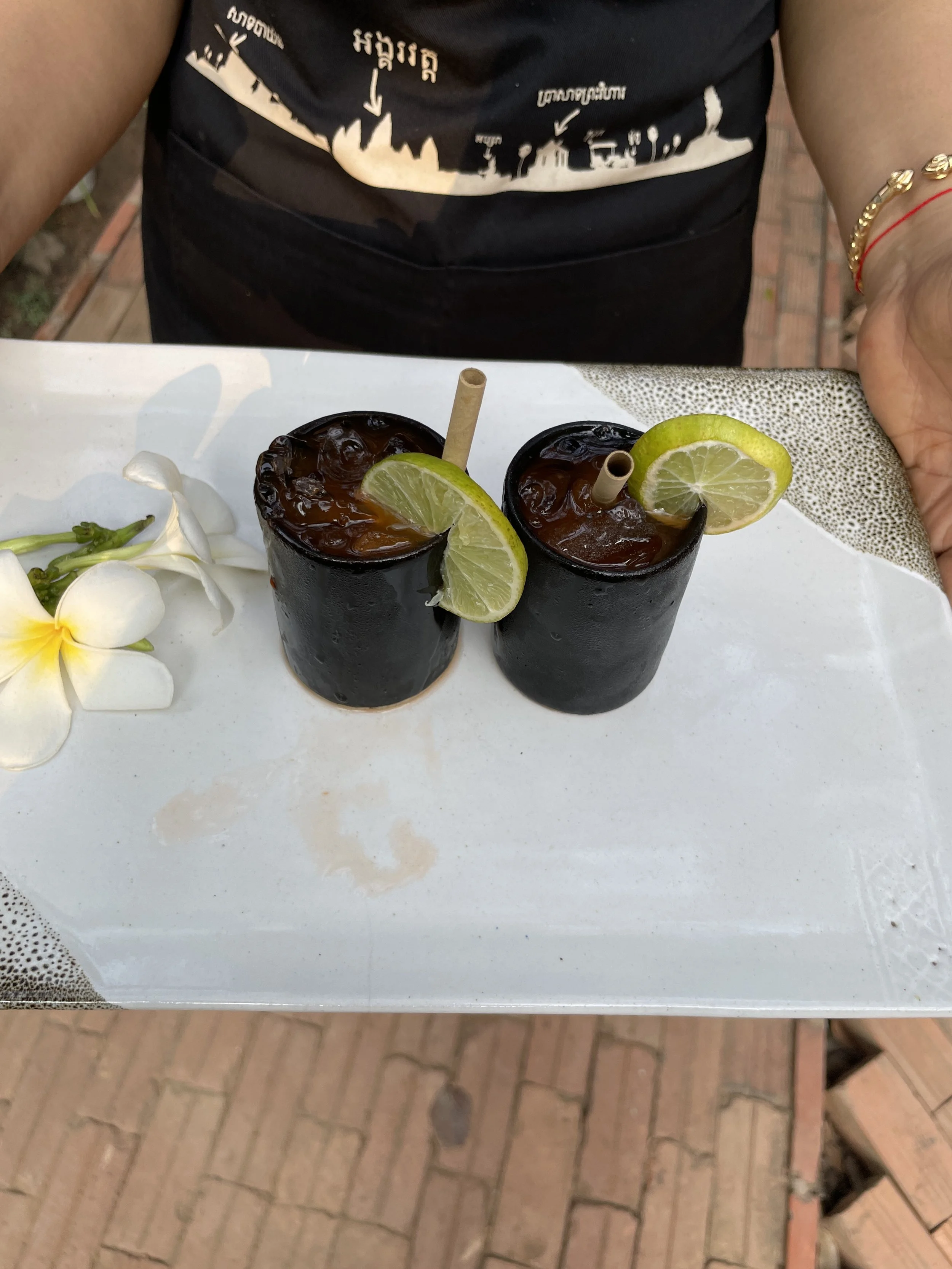
At a pottery workshop in Cambodia, in the heat of the day, my husband and I were offered small cups of cold tea, each with a flower floating on top. I bought a set of those black-glazed cups, but the real takeaway was the gesture. Having something ready to offer guests the moment they arrive is an easy way to set the tone and create a moment of delight.
Borrowing a design technique: skirted tables and fabric-covered frames
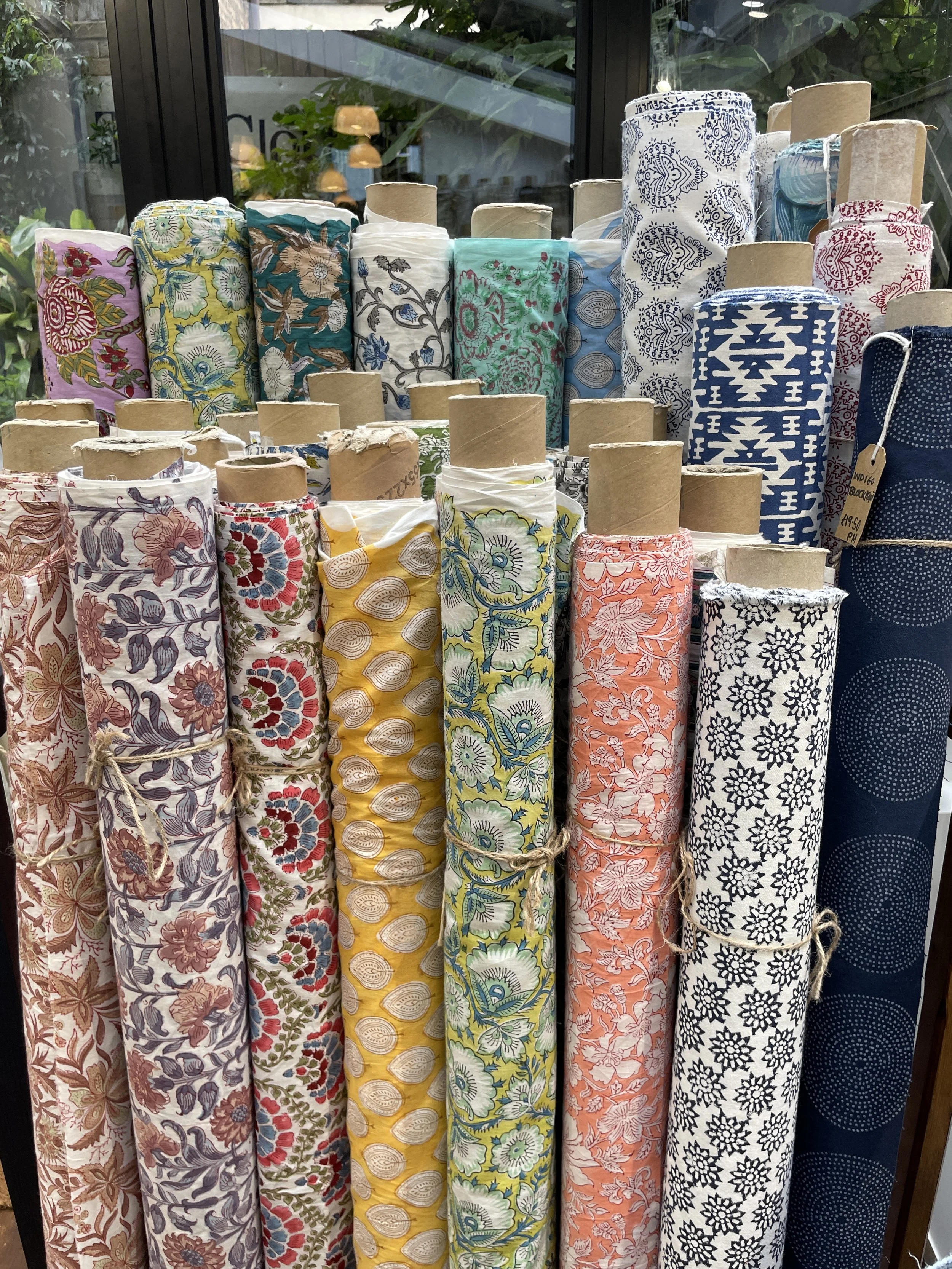
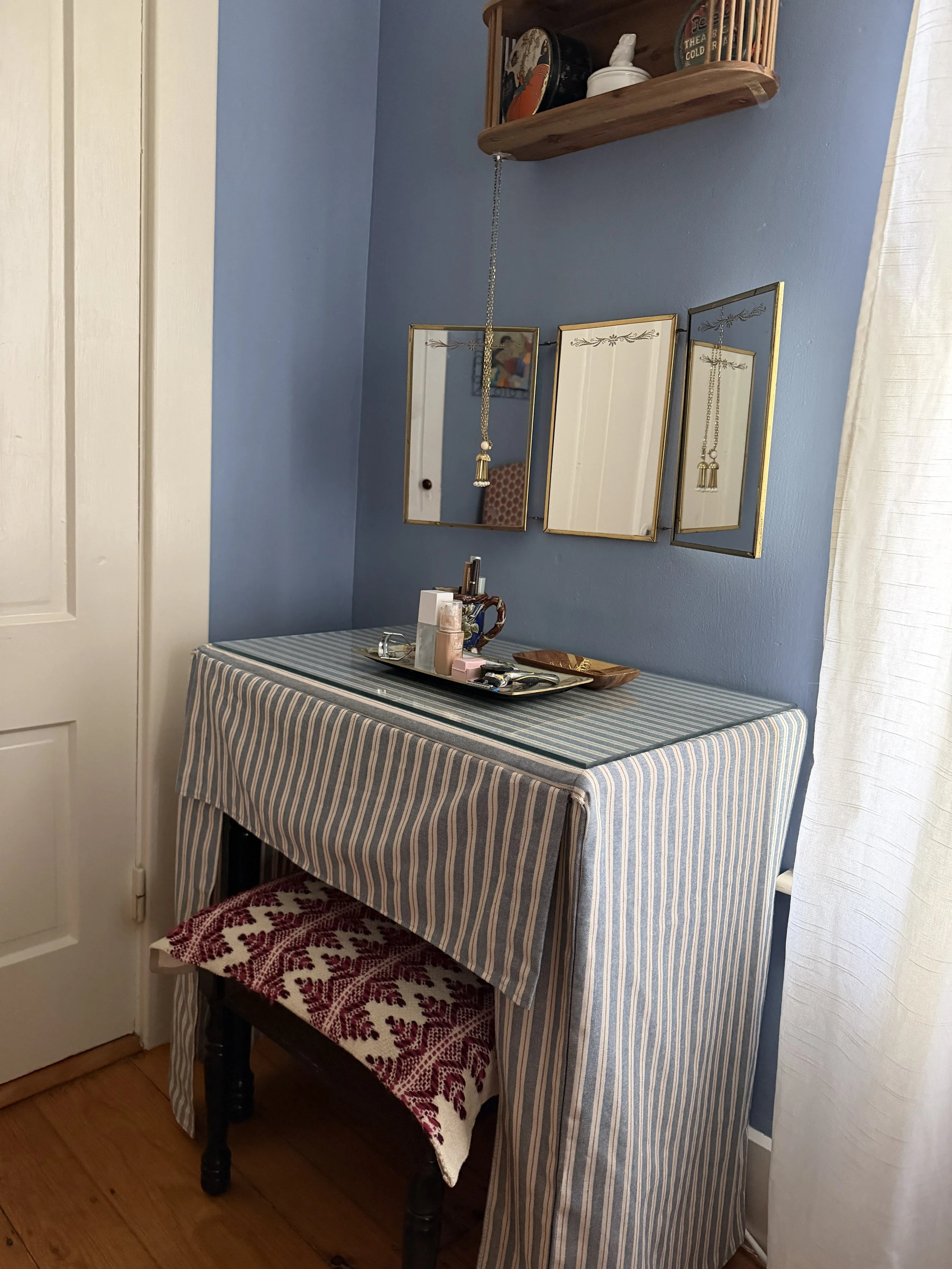
Skirted tables aren't new, but in the London hotels we stayed in, I noticed how much softness and pattern they added next to more contemporary pieces. That idea became a skirted slipcover for my thrifted vanity, made in fabric I bought in London. On a later trip, a series of floral illustrations at art dealer Julia Collins's gallery, framed with vintage fabric on the frames and mats, inspired how I framed a set of antique bird illustrations for our powder room.
Using paintings as a source for color palettes and pattern
Paintings are one of my biggest sources of decorating ideas. I look less at the subject and more at the color palette, a pattern in the background, or the way two shapes sit next to each other. Some of my favorite painters for color and pattern are Cézanne, Matisse and Bonnard. Those ideas often land on our living room window seat, where I remix my pillows several times a year.
Pillow covers: a travel souvenir that takes no room in your suitcase
If you want a souvenir beyond the T-shirt or keychain, look for a pillow cover in a pattern or fabric local to the place you're visiting. It folds flat, takes no room in your luggage, and doesn't feel like a souvenir once it's home.
How to create a vignette around a current interest
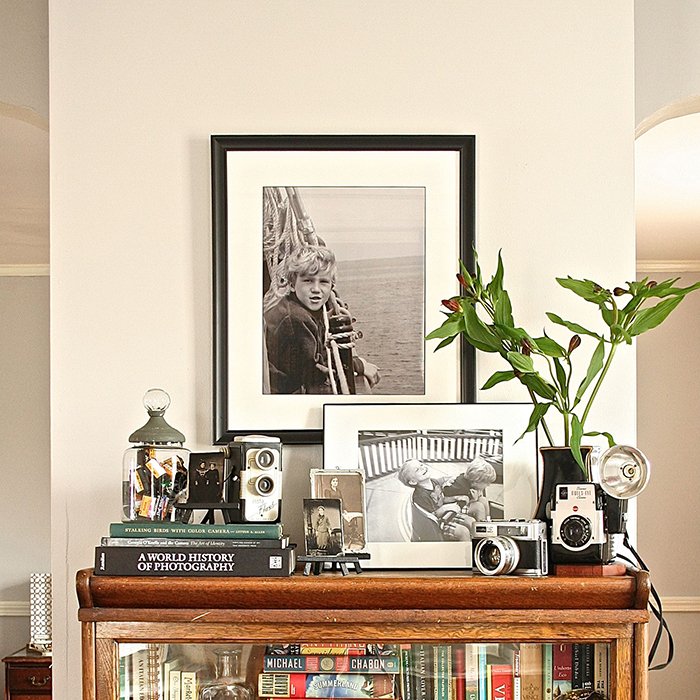
Enrich doesn't always mean going far away. When I get curious about a subject, I pull together a few related pieces and mix them with things I already own. That might be a glass canister of old film rolls, a black-and-white candid of my kids and a vintage camera. Or it might be candlesticks, a gilded mirror and a fringed scarf inspired by a dream of traveling to India. A vignette lets you try on a look in one small spot without committing your whole house to it.
Designing a whole room inspired by a landscape
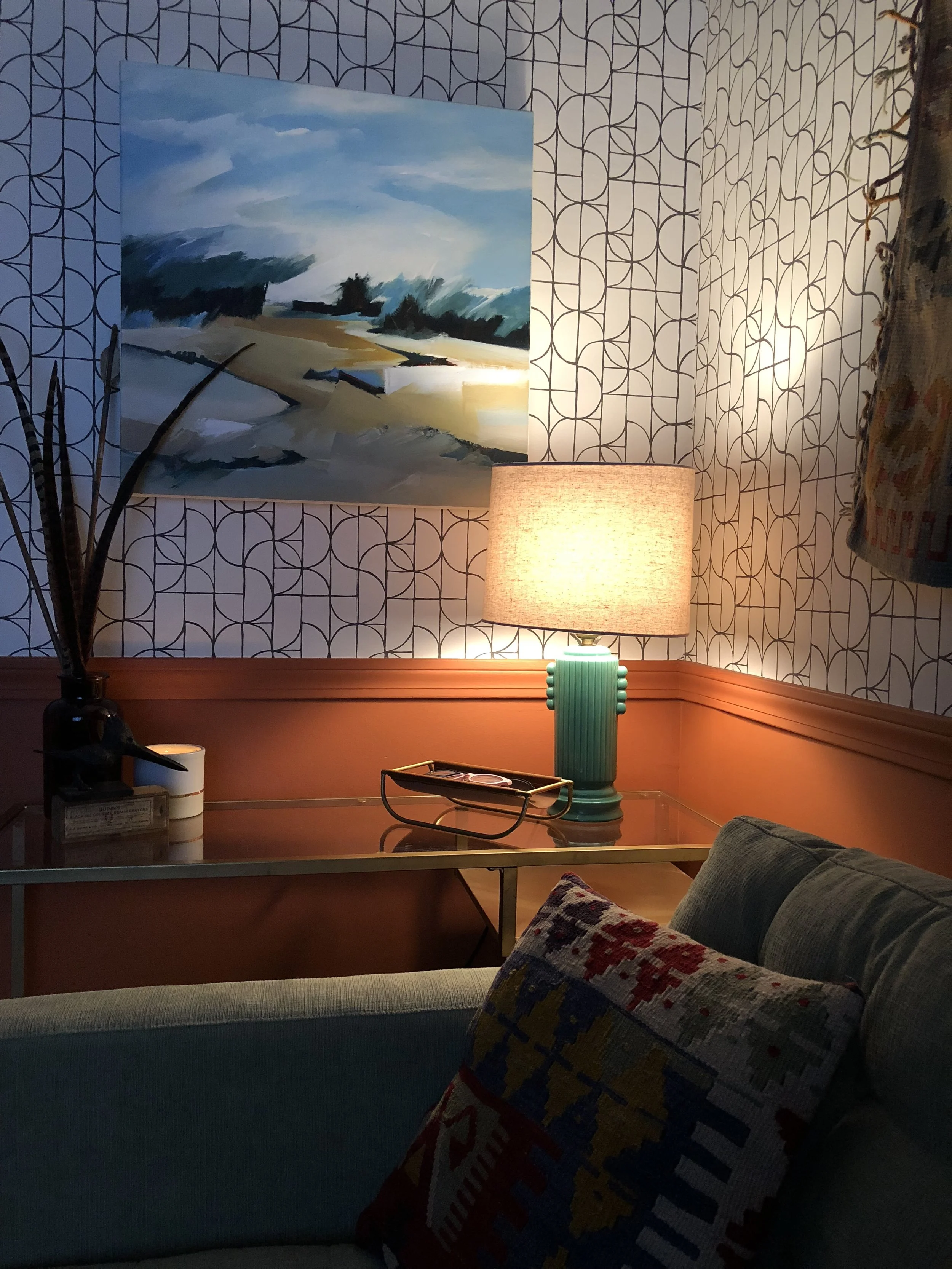
Our den grew out of our love of Santa Fe. The paint colors came from the umber, sienna and gold rocks of the Southwest. The wallpaper above the chair rail, a cream background with thin charcoal circles that remind me of suns, keeps the room from feeling overly thematic. Art from the galleries on Canyon Road, a sun-bleached cow skull and shed animal horns complete it. The room came together slowly, over years.
How to start a style book
A style book is a cross between a scrapbook, a filing system and a series of mood boards. Mine holds tear sheets from magazines and paper ephemera from trips, like a napkin, a botanical garden map or a postcard. It has blank pages for laying out a color and pattern palette when I'm planning a room. Think of it as a visual diary of what's catching your eye.
The first three skills, Envision, Experiment and Execute, each have their own episode for podcast subscribers. Subscribe to listen. Find more solo episodes and full show notes at SlowStyleHome.com/podcast.