Your Home Has a Volume Control Panel. Aubrey Butcher Knows How to Use It.

I tour the Dallas home of Aubrey Butcher, co-founder — with her husband Kale — of the tile and stone company Riad Tile, and come away with an idea I'm calling the volume control panel: the sense that every room has a dial for what gets noticed first, and most decorating advice only teaches you how to turn it down.
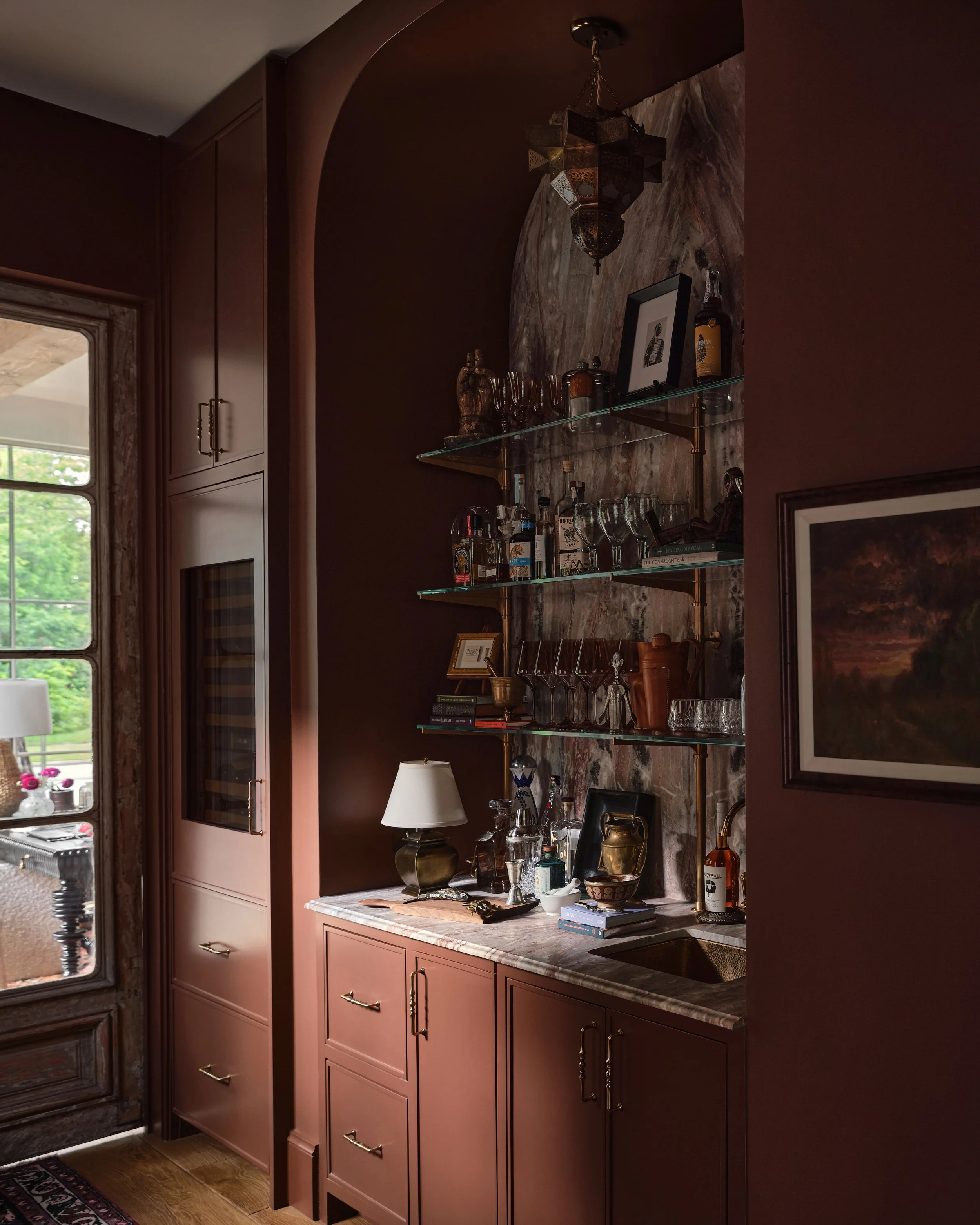
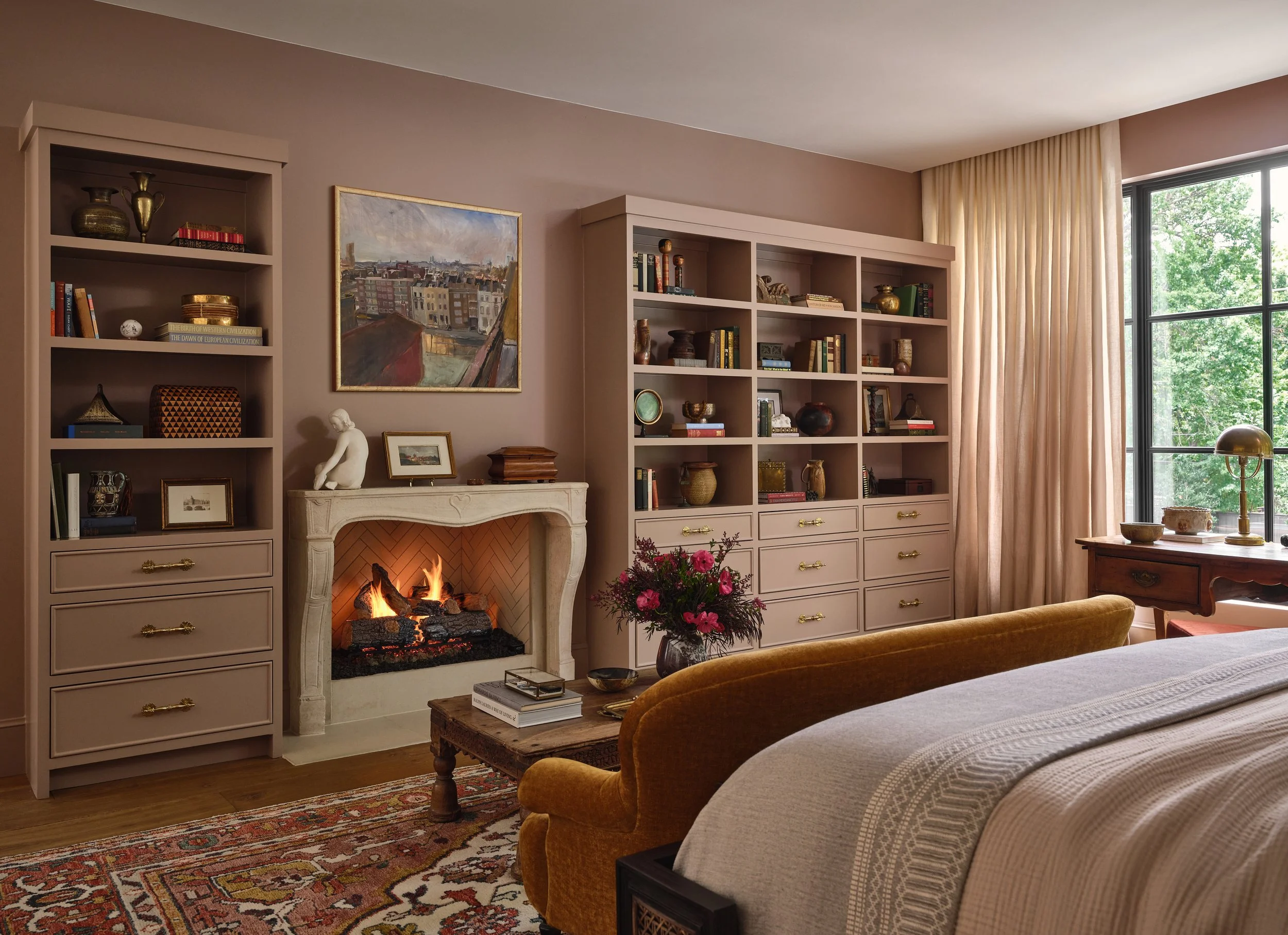
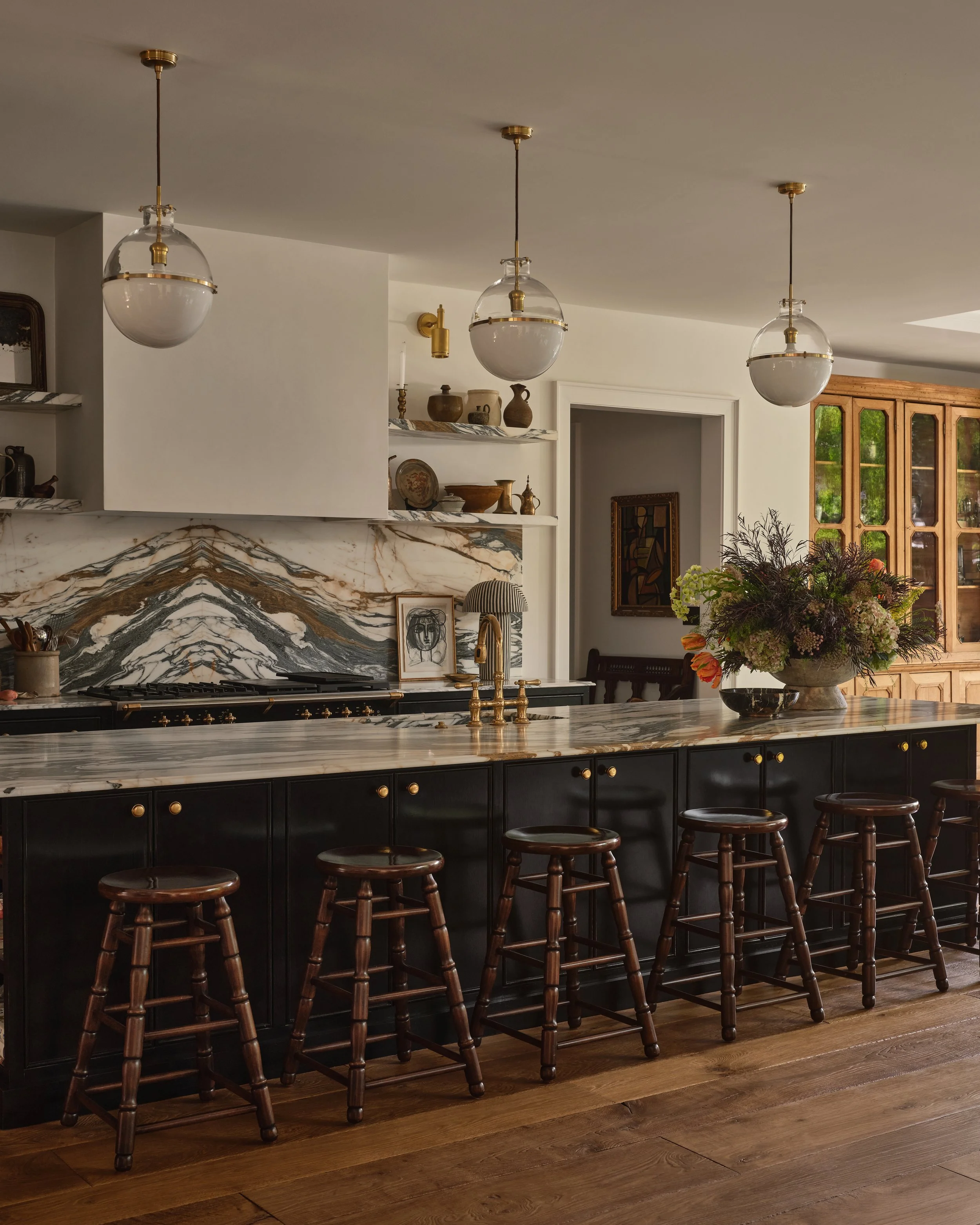
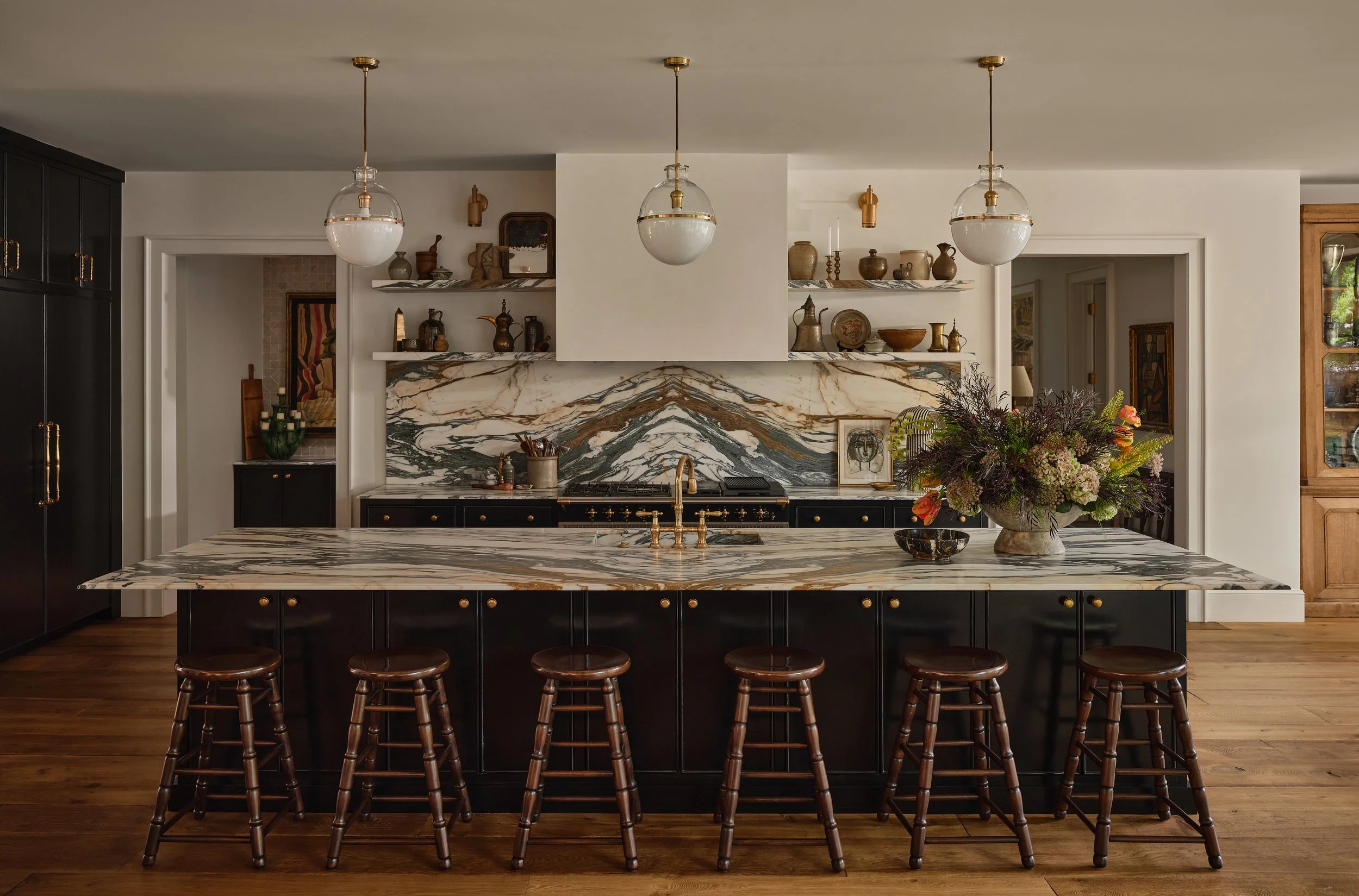
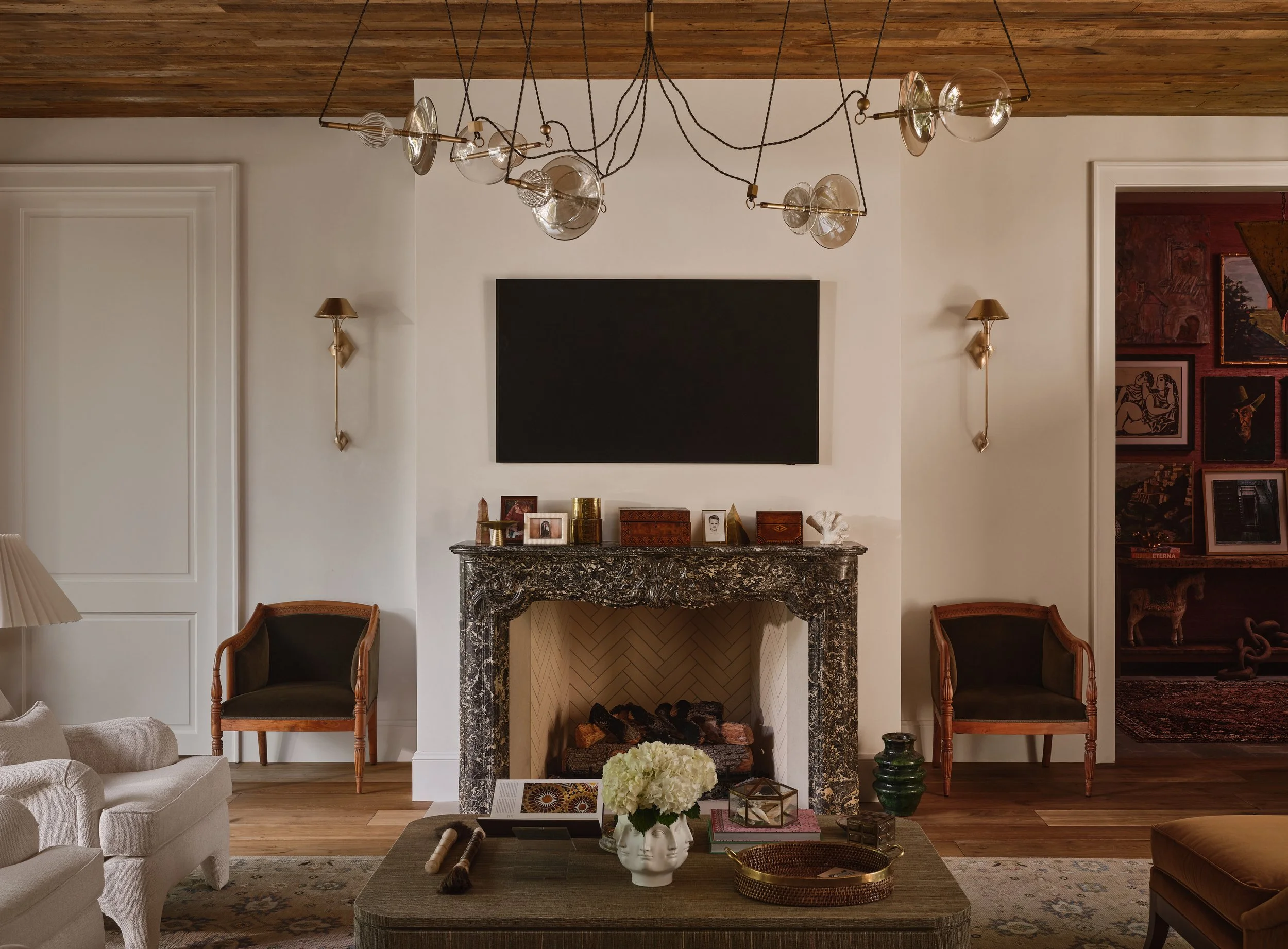
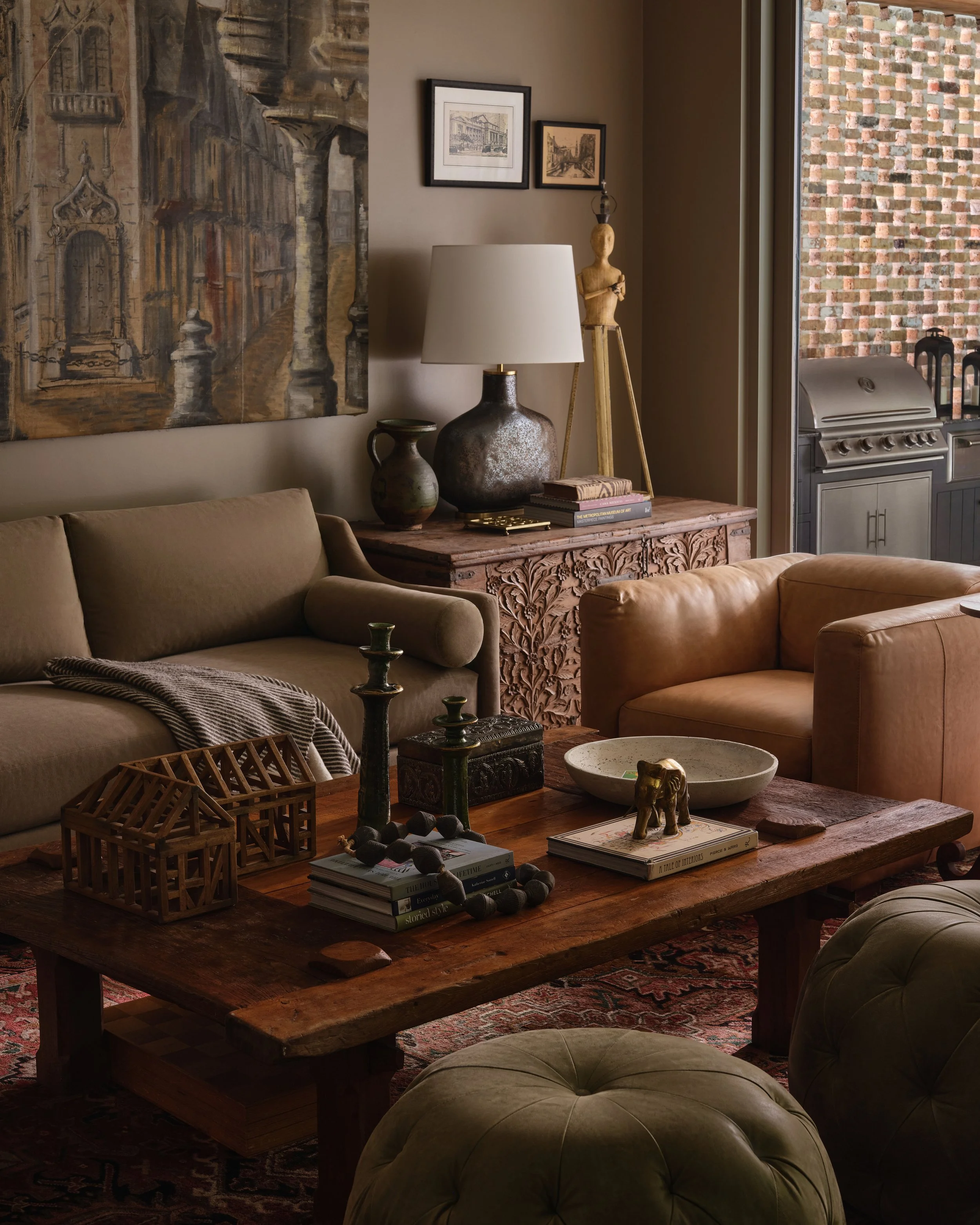
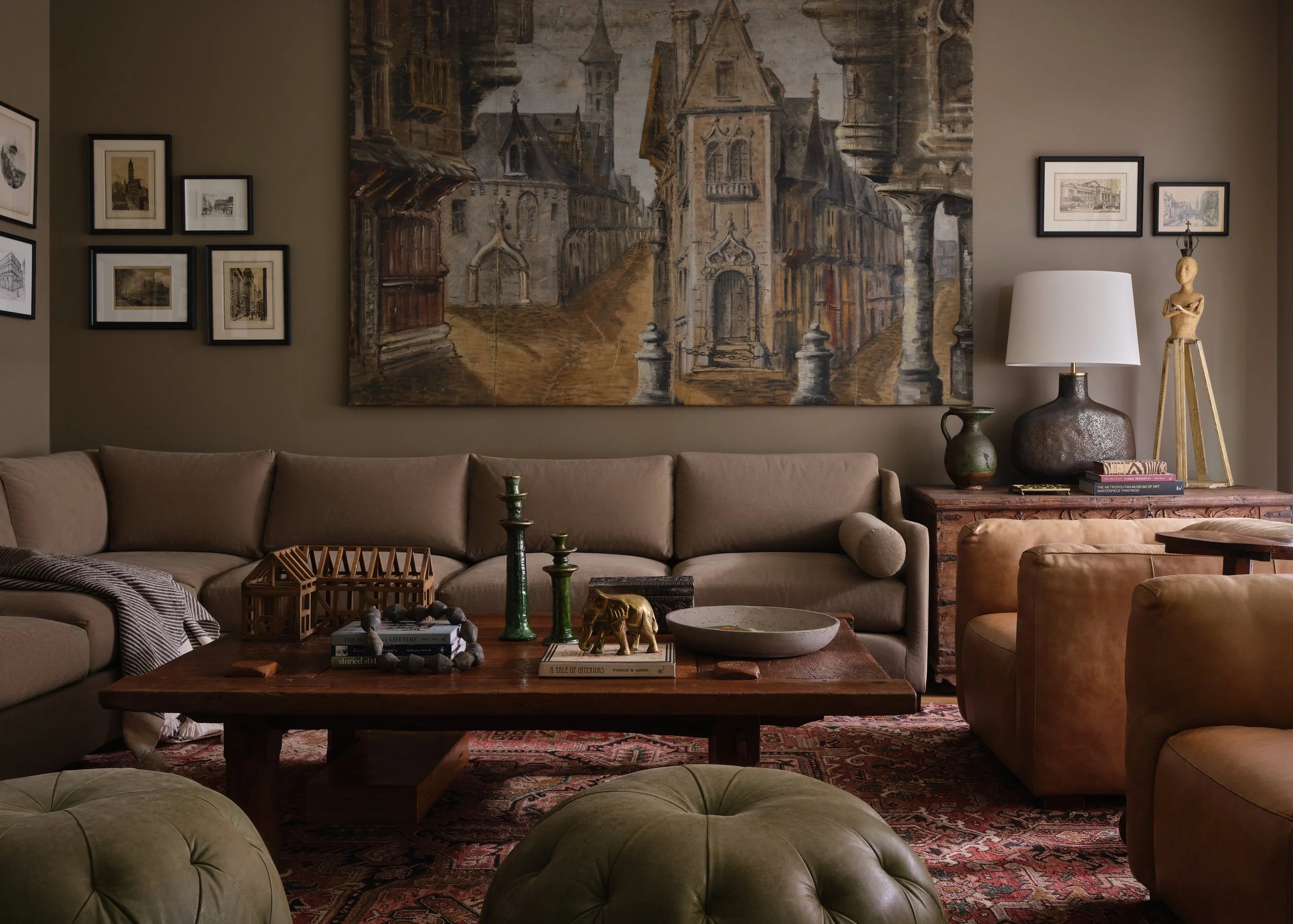
Aubrey works both ends of it. Throughout her home, she takes what designers call the envelope of a room — the ceiling, floor, and walls — along with the large pieces of furniture, and pushes those elements toward quiet: a sectional sofa painted the exact same color as the wall behind it, built-in cabinets painted to disappear into the walls around them, drapery hung with the hardware hidden so panels fall straight from the ceiling with nothing to interrupt the line. Then, because she and Kale spend their careers sourcing tile and stone from quarries and factories around the world, she uses that same material to turn the volume back up exactly where she wants it — dramatic marble at the fireplace, the kitchen backsplash, and the bar; a striped tile pattern that runs floor to wall in the laundry room.
This episode is a full room-by-room tour of that home, plus a conversation about how one overpriced bathroom tile led Aubrey and Kale to Morocco, a shipping container, and eventually Riad Tile — and a plain-language walkthrough of how to actually choose between stone, ceramic, porcelain, zellige, cement, and terrazzo tile.
With your monthly subscription, you'll have access to exclusive, full length episodes, both audio and video. After signing up, you'll receive an email with easy instructions on how to add this premium show to your podcast player (Apple, Spotify, etc). And every week, you'll receive a link to the video version. As you may know, in the audio version, I make a strong effort to describe the designs we're looking at. But if you want to see everything for yourself, you'll want to click the link to the video version we'll be sending you.

This episode is sponsored by Aura House.
Elegant diffusers, clean, natural scents, free of toxins.
KEY TAKEAWAYS
The volume control panel: how to decorate a home full of collected objects without it feeling chaotic
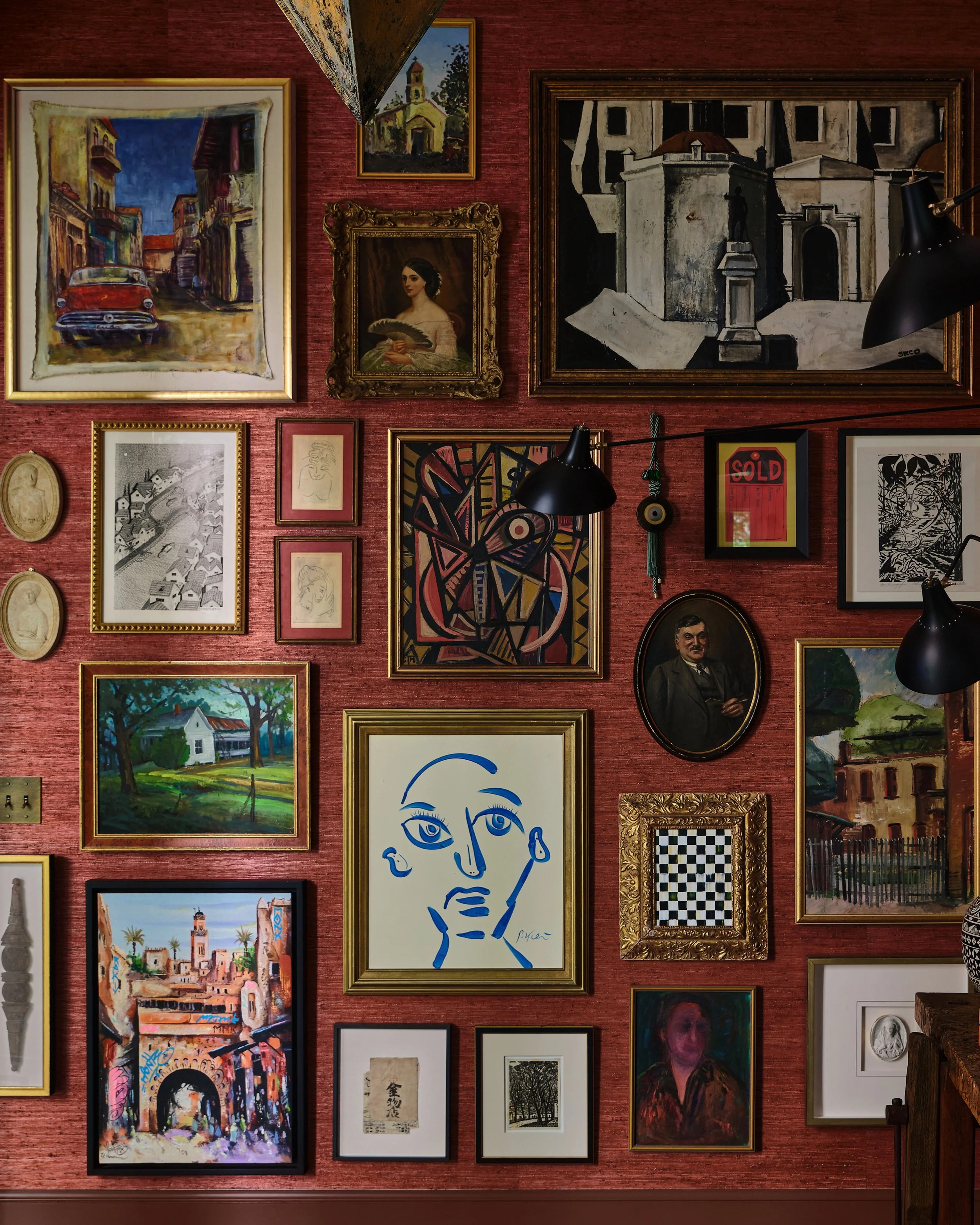
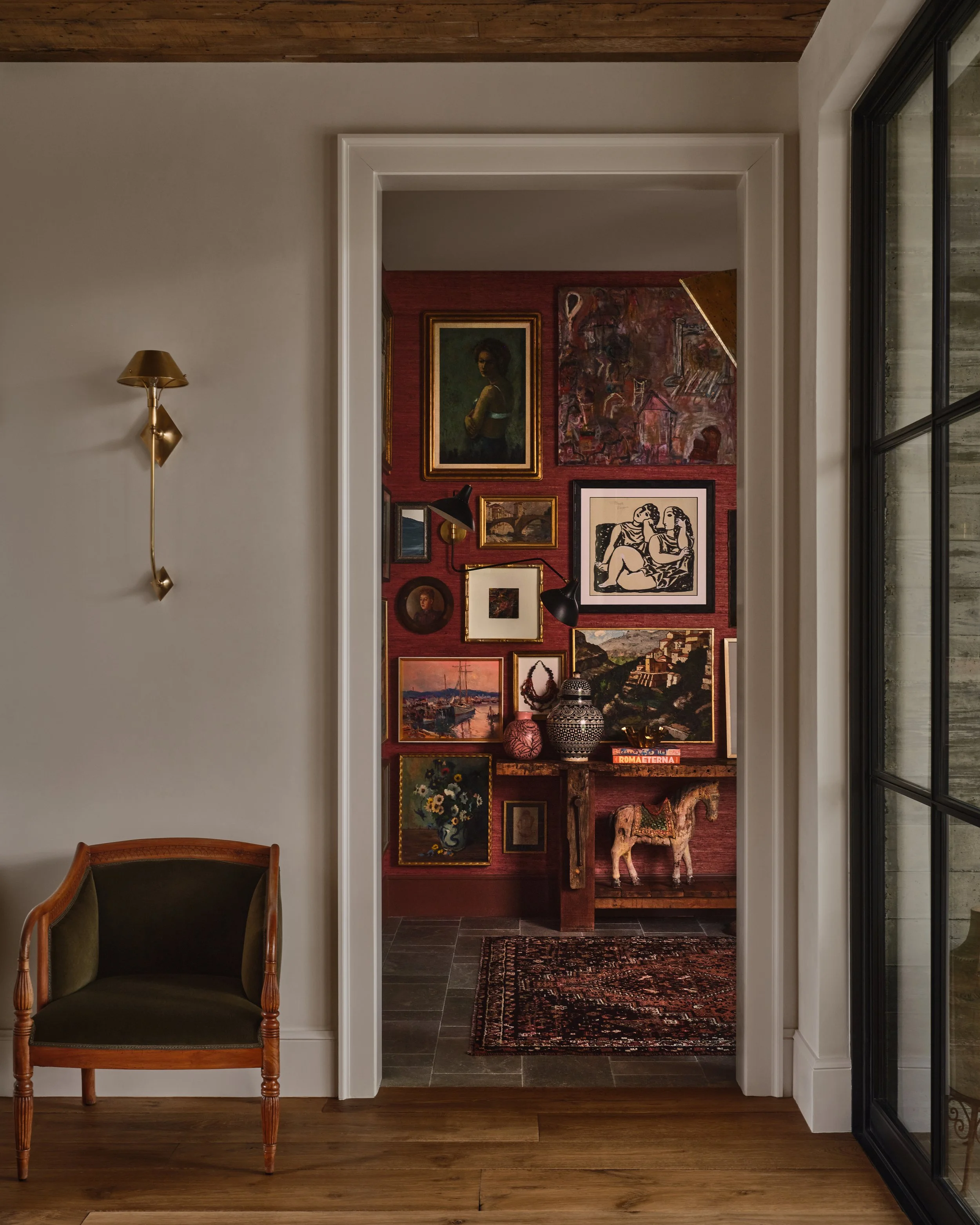
Aubrey's home is filled with antiques, travel finds, and family pieces — the kind of collection that can tip a room into visual noise. Her solution isn't fewer objects. It's quieting the architecture around them: walls, built-ins, and large furniture painted to match, so the objects themselves become what a visitor notices first.
The trick behind a sectional that disappears
In the family room, a large sectional sofa is upholstered in the same color as the wall behind it. Rather than anchoring the room the way large furniture usually does, it recedes — leaving room for a pair of antique leather Round Top chairs and a large piece of art to hold the visual weight instead.
A drapery pocket, borrowed from hospitality design
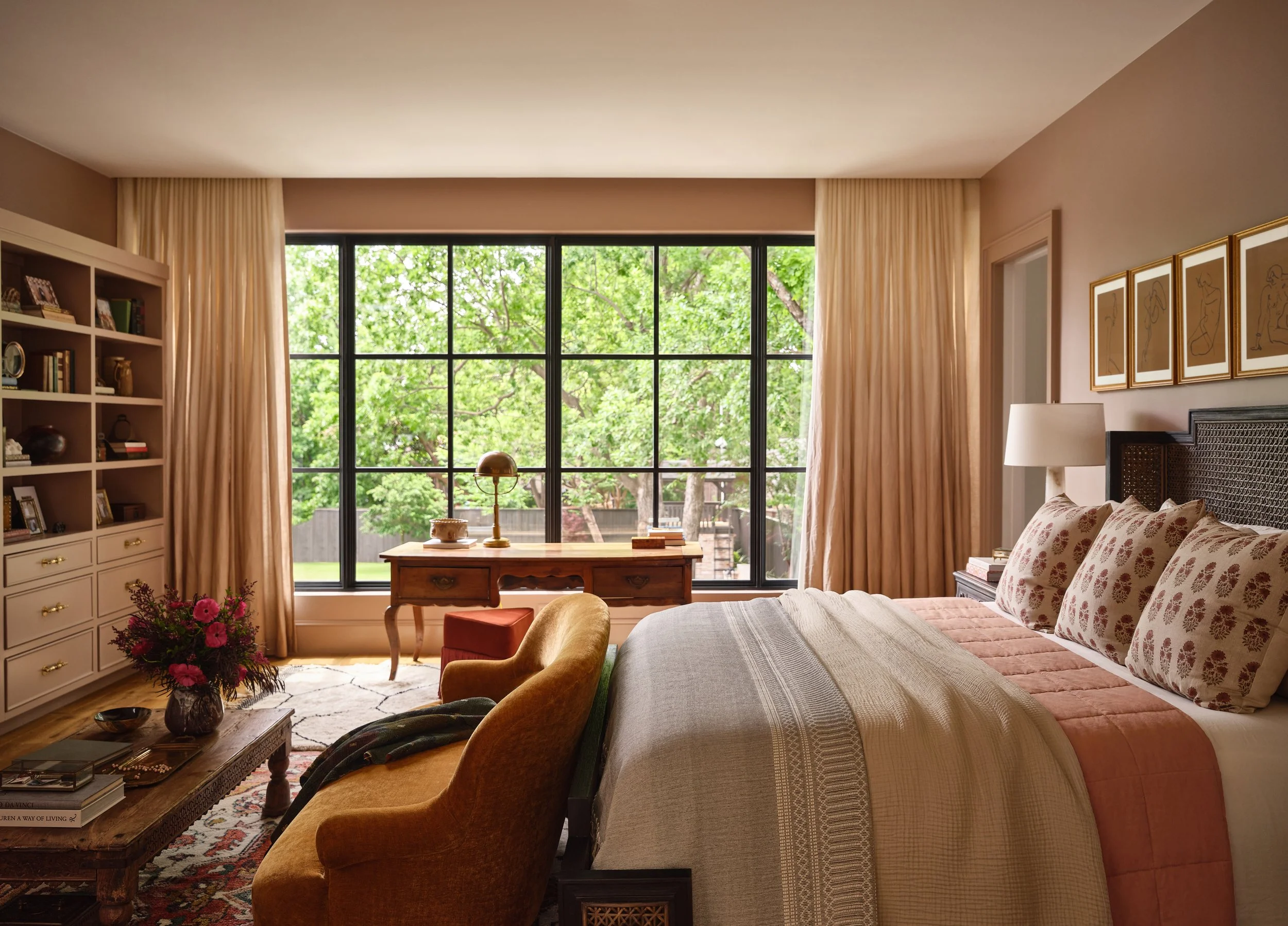
Before designing homes, Aubrey worked in hospitality, where a trick called a drapery pocket frames a hidden channel above a window so curtain hardware never shows. She used it in her primary bedroom and primary bathroom, where the drapery appears to fall straight from the ceiling and pool on the floor with no visible track.
Where the volume turns back up: three marbles, three moods
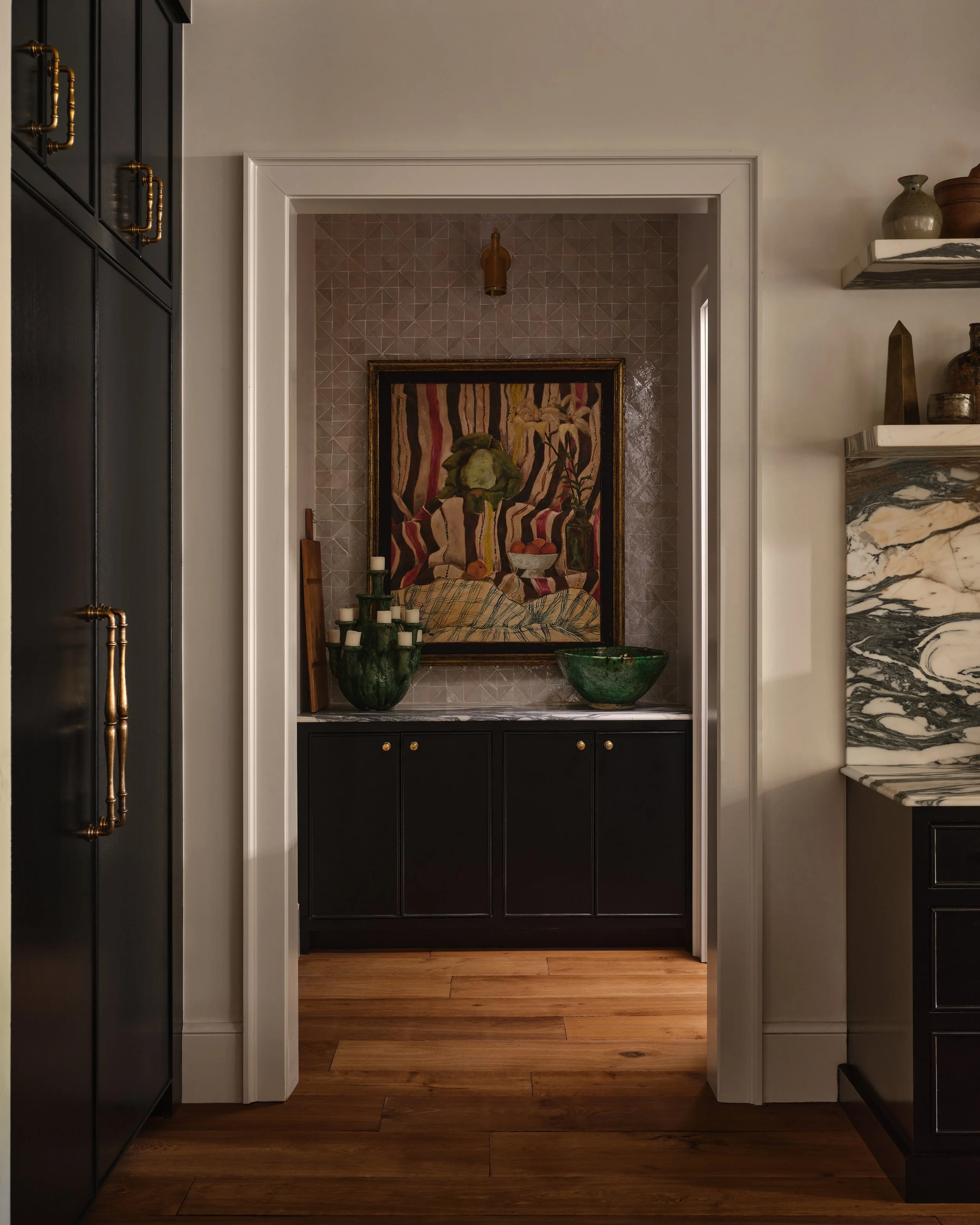
The fireplace mantel in the family room is a dark, dramatic marble instead of the traditional white; the kitchen backsplash and island are cut from two book-matched Italian slabs; the back of the bar carries a third slab in a brown-red tone that echoes the entryway. Each one is intentionally the loudest thing in its room.
A striped tile floor that climbs the wall
In the laundry room, two shades of zellige tile are laid in a stripe that runs across the floor and continues straight up the wall — proof, per Aubrey, that even a utility space deserves a real design moment.
How to choose tile: stone, ceramic, porcelain, zellige, cement, and terrazzo, explained
Aubrey breaks down the real differences: natural stone is quarried and needs sealing but rewards you with depth and patina over time; ceramic is fired at a lower temperature and slightly more porous than porcelain, which is dense and durable enough for high-traffic areas; zellige is a handmade ceramic tile prized for its imperfections and used outdoors for centuries in Morocco; cement tile is pigmented rather than glazed and reads more like suede than stone; terrazzo is cement tile embedded with stone aggregate and polished smooth, available in both bright, colorful mixes and quiet, tonal ones.
A Round Top find worth the story
A pair of genuine leather antique chairs, purchased at the Round Top antiques show for under $1,000, turned out to be a rare pairing — Aubrey later spotted the same chairs, in brown leather, listed on the resale site Chairish for around $12,000.
Aubrey Butcher is co-founder of Riad Tile, based in Dallas, Texas. Find more Designers at Home episodes and full show notes at SlowStyleHome.com/podcast.
Links Mentioned In The Episode
Riad Tile Website
Photos By Michael P.H. Clifford