A Great Mix Is a Good Conversation: Choosing Objects That Talk to Each Other — with Nadia Watts

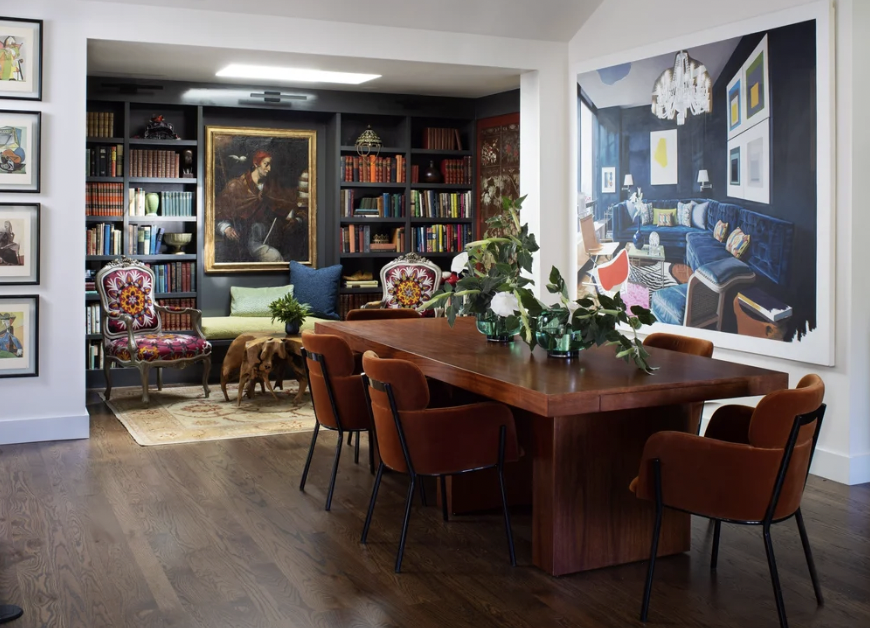
In this Think Like A Designer episode, I sit down with Nadia Watts, an interior designer based in Colorado who works with clients across the country, to look through a selection of her portfolio. Most of our time is spent in one home: the house of an architect and avid collector, filled with salvage-yard finds, family heirlooms, old-world antiques, and contemporary art. We also visit two more projects, and we talk about Nadia's heritage as a descendant of Louis Comfort Tiffany and her Gem Collection of fabrics with Kravet.
What I kept noticing across Nadia's work is something I'm calling every piece in conversation. It's the idea that a mixed room feels deliberate when each object is in conversation with something else in the room. Sometimes that conversation is agreement: two pieces share a color, a finish, a material, or an era. Sometimes it's a friendly debate: two opposites set each other off, and each becomes more itself. The pieces don't have to match. They have to answer each other. That's what separates a mix that feels collected from one that just feels busy, and it's one of the most useful tools I know for mastering the mix at home.
The slide deck from this episode is available below. Browse the portfolio images alongside the takeaways, or watch the full episode as a subscriber.
With your monthly subscription, you'll have access to exclusive, full length episodes, both audio and video. After signing up, you'll receive an email with easy instructions on how to add this premium show to your podcast player (Apple, Spotify, etc). And every week, you'll receive a link to the video version. As you may know, in the audio version, I make a strong effort to describe the designs we're looking at. But if you want to see everything for yourself, you'll want to click the link to the video version we'll be sending you.

This episode is sponsored by Aura House.
Elegant diffusers, clean, natural scents, free of toxins.
KEY TAKEAWAYS
Every piece in conversation: how to make a mixed room feel deliberate
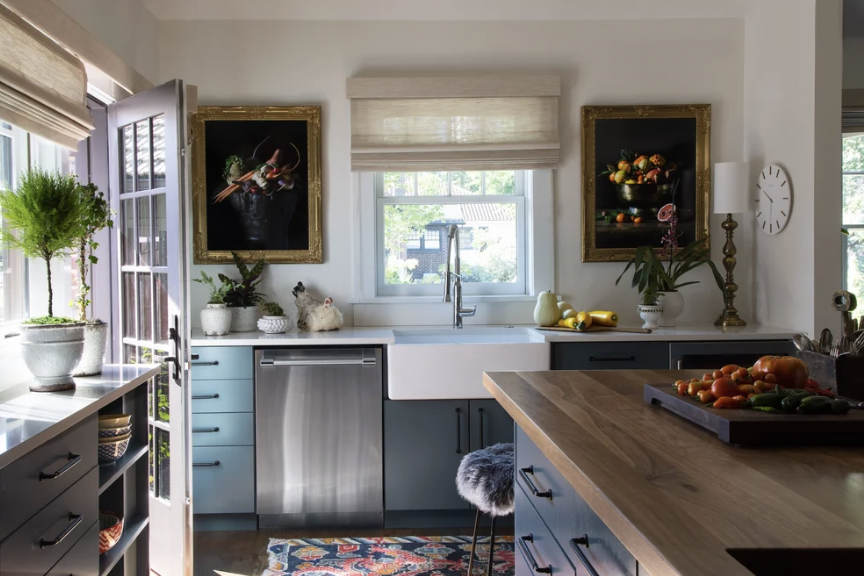
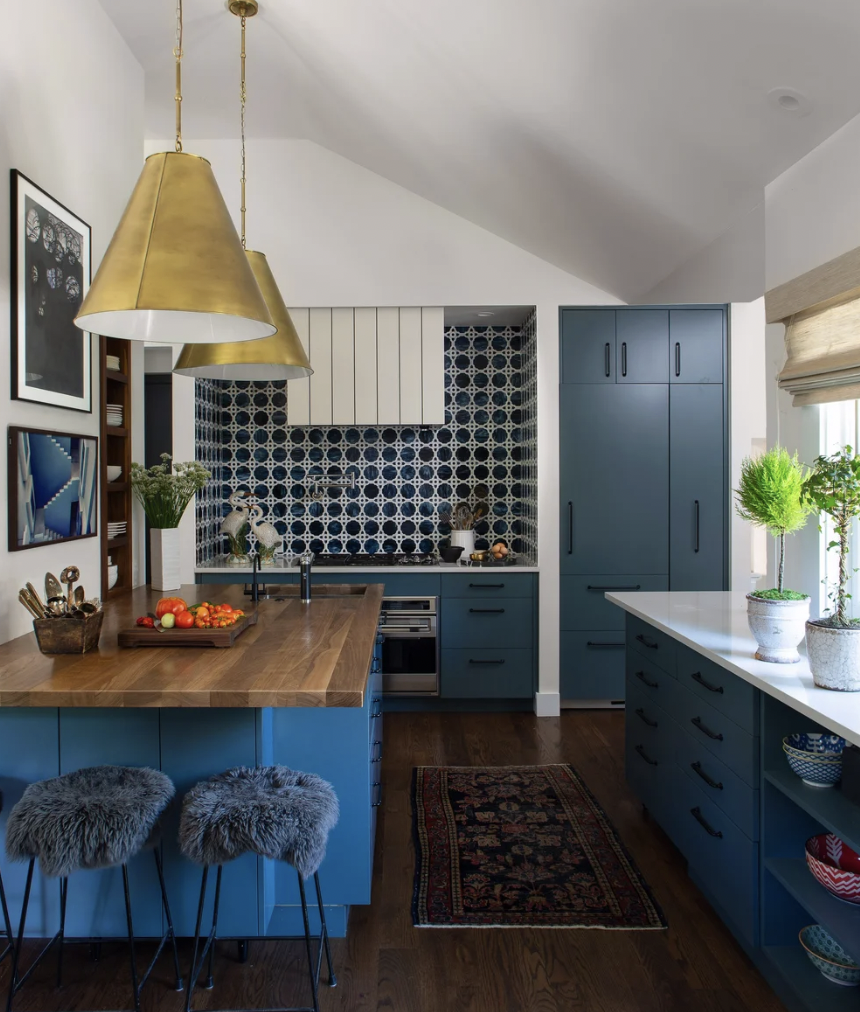
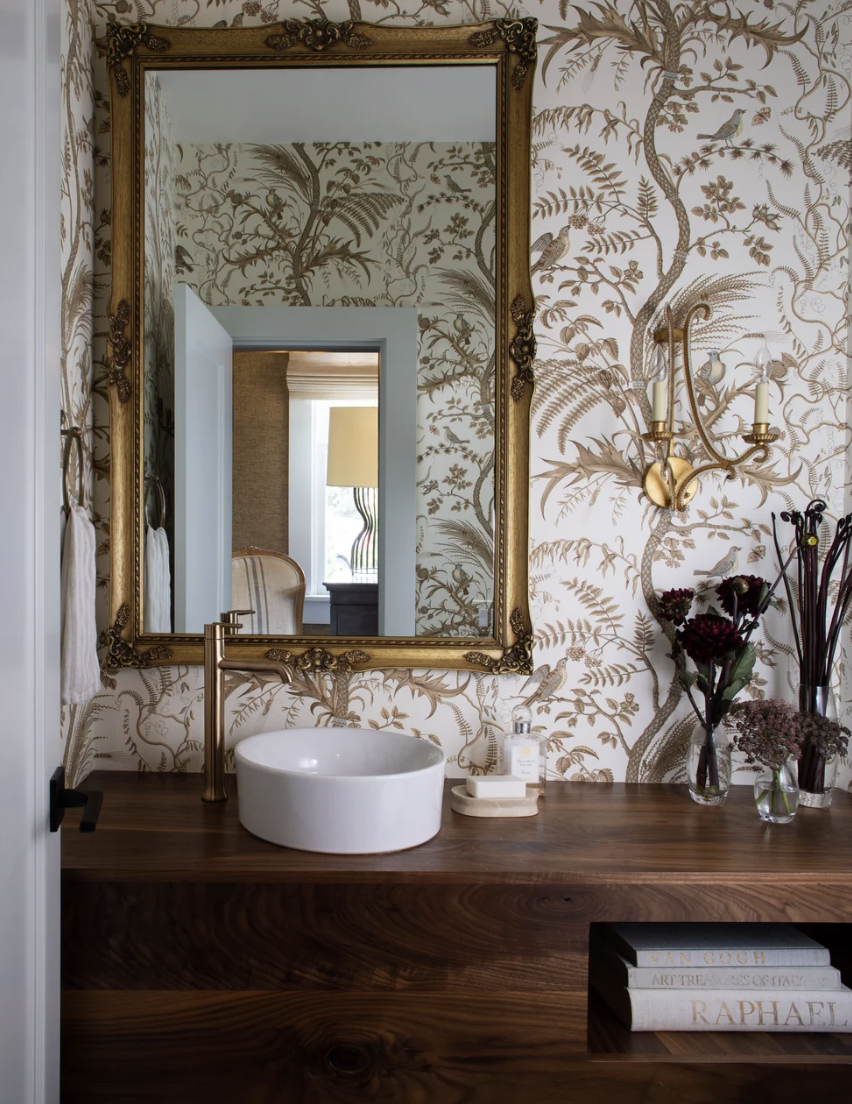
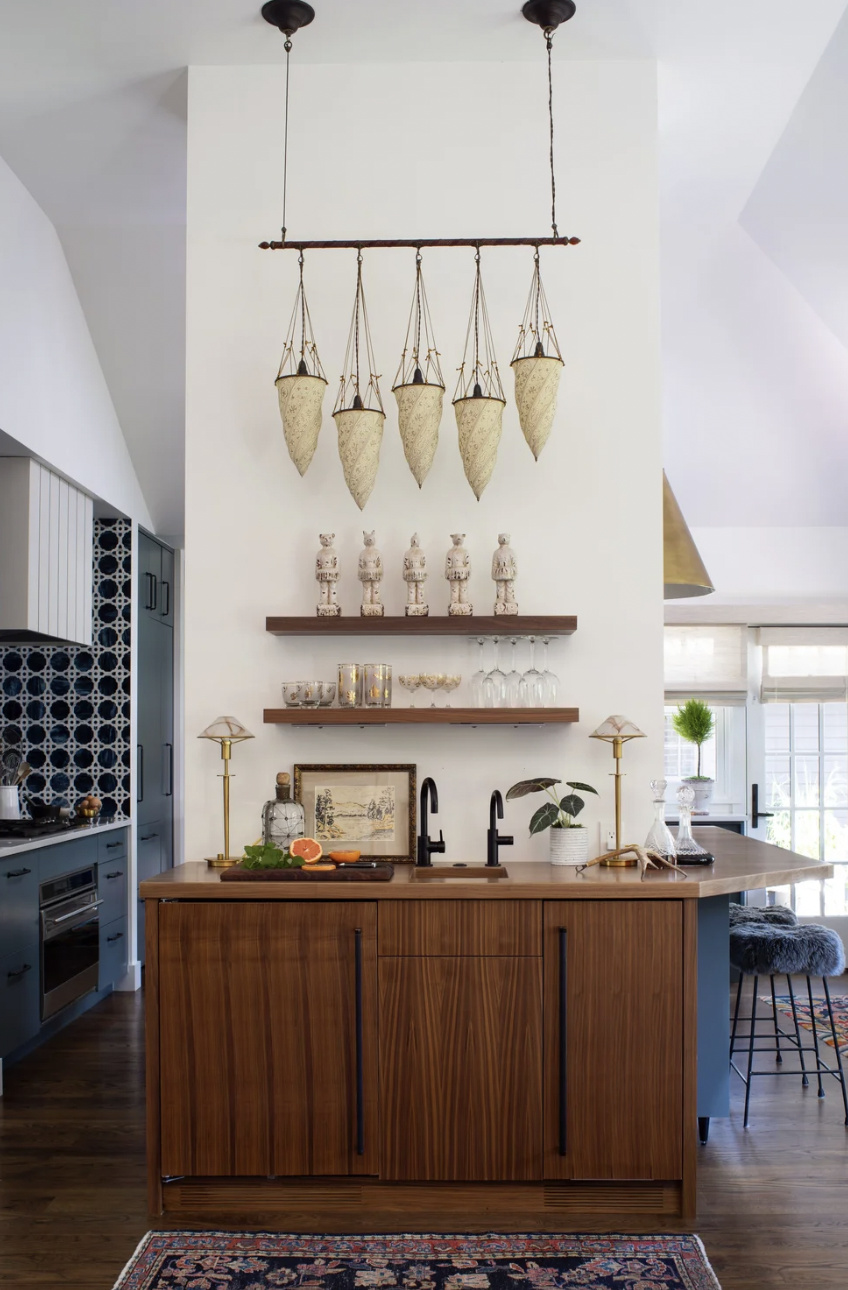
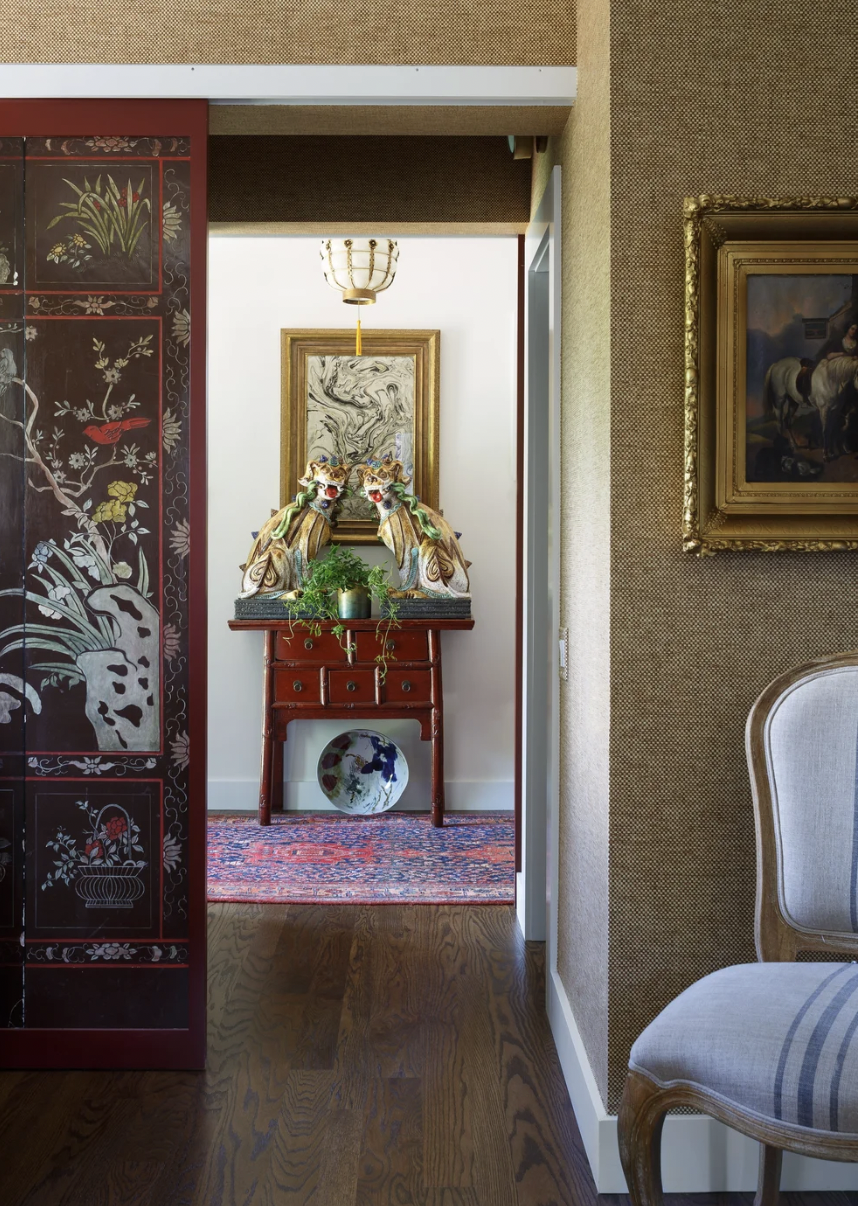
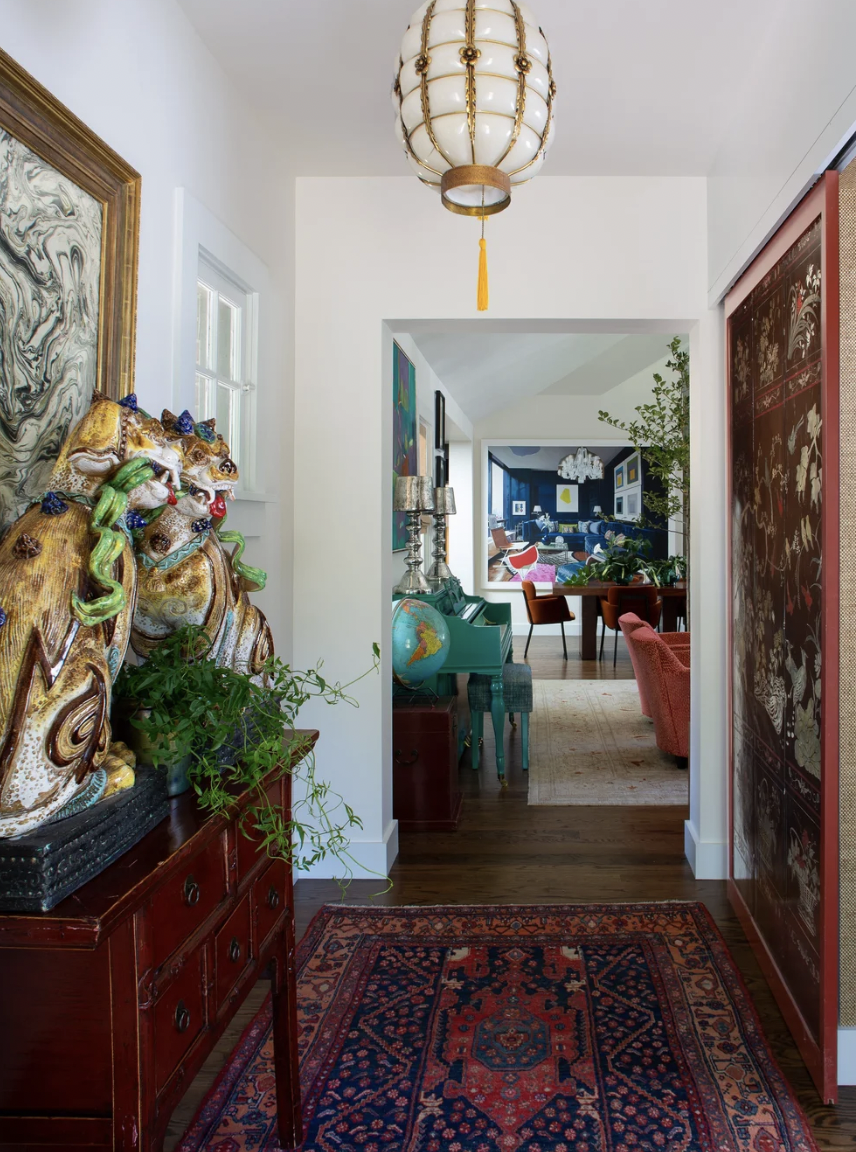
A room full of different styles and eras holds together when every piece has at least one relationship with something else in the space. In the main house we look at, the gold of an ornate powder room sconce answers a gilded blown-glass lantern in the foyer. The heavy gold frames on two still-life photographs in the kitchen answer the brass cone pendants over the peninsula. In another home, a taxidermied pheasant sits in front of a contemporary abstract painting that shares its rusts, browns, and golds. If a piece in your home has never felt right, ask what it's talking to. If the answer is nothing, it may need a conversation partner rather than a replacement.
How to mix light fixtures in one house
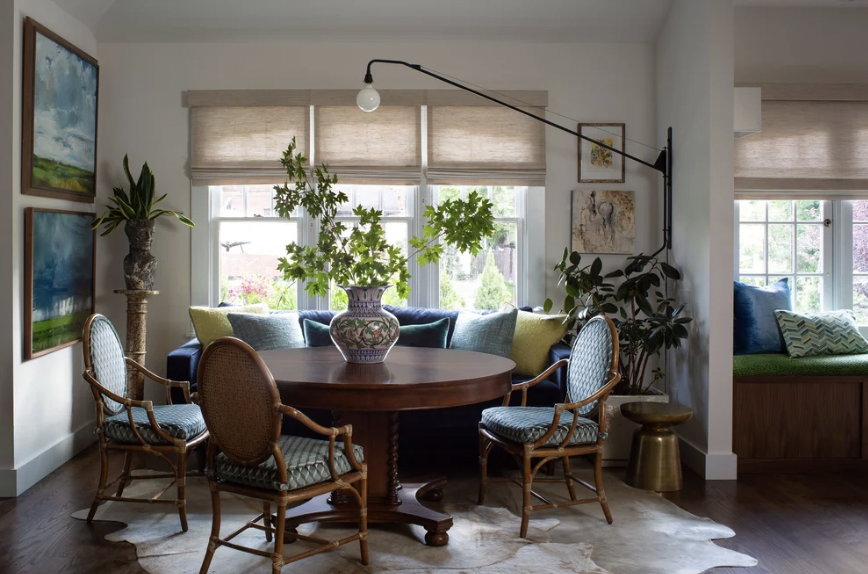
Within a single home, Nadia uses a gilded, pinecone-like blown-glass lantern with a tassel in the entry, a secondhand Fortuny fixture of Moorish design in the bar area, and a spare modern single-bulb fixture extending from the wall over the breakfast table. The modern fixture brings light down from a high ceiling and nearly disappears, and that friendly debate between the two is what lets the ornate Fortuny stand out. A small, contained entry is a good place for an unexpected fixture, because it has room to be the whole story.
Using asymmetry when a space is tight
In a small powder room, the vessel sink had to be offset to the left because of the toilet's placement, and there was only room for one sconce. Nadia used a formal, classical family mirror over the streamlined sink, hung a single ornate gold sconce to one side, and added an organic, traditional wallpaper from Brunschwig & Fils. The constraint became the character of the room. A classical piece in an unexpected placement often looks more interesting than a symmetrical arrangement.
Give a bold element a frame of its own
In the kitchen, a water-jet glass tile by Akdo, in a very dark blue and a cream white, fills only the alcove around the range rather than the whole backsplash. Contained that way, it reads almost like a piece of art hung on the wall. Spread across the kitchen, as Nadia puts it, it would lose its importance. In another home with more traditional millwork, the trim lets each room stop and start its own color story, so the kitchen can stay a muted celadon while the dining room goes bold with persimmon Dedar silk drapes and a chocolate-and-persimmon Katie Ridder wallpaper.
Let one piece lead, and choose everything else to support it
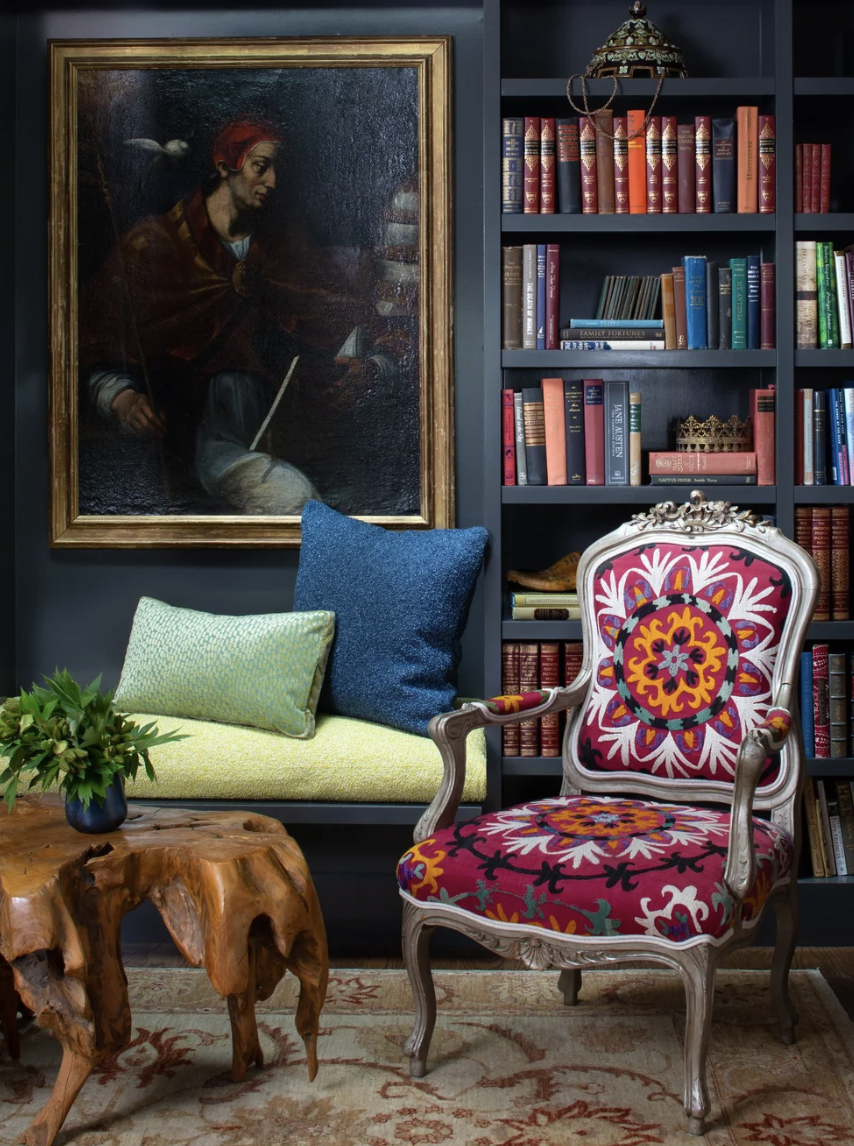
In a blue-gray paneled room built around an antique pine gateleg puzzle table, the showstopper is a vintage hand-painted French gourd chandelier, about 30 inches across, with a matte green-black exterior and a cream interior. It doesn't match anything else in the room, on purpose. The skirted club chairs are in a Ralph Lauren blue-and-white damask paisley rather than red and white, the walls are an in-between blue-gray rather than pure navy, and woven shades echo the wood of the antique armoire. Every choice gives the chandelier room to lead. In the main house, Nadia used solid but textured bouclé and cut velvet from her own Kravet line on the built-in seating so a pair of carved Argentinian chairs upholstered in beaded suzani could stand out.
Playing with scale: over-scaled lighting done well
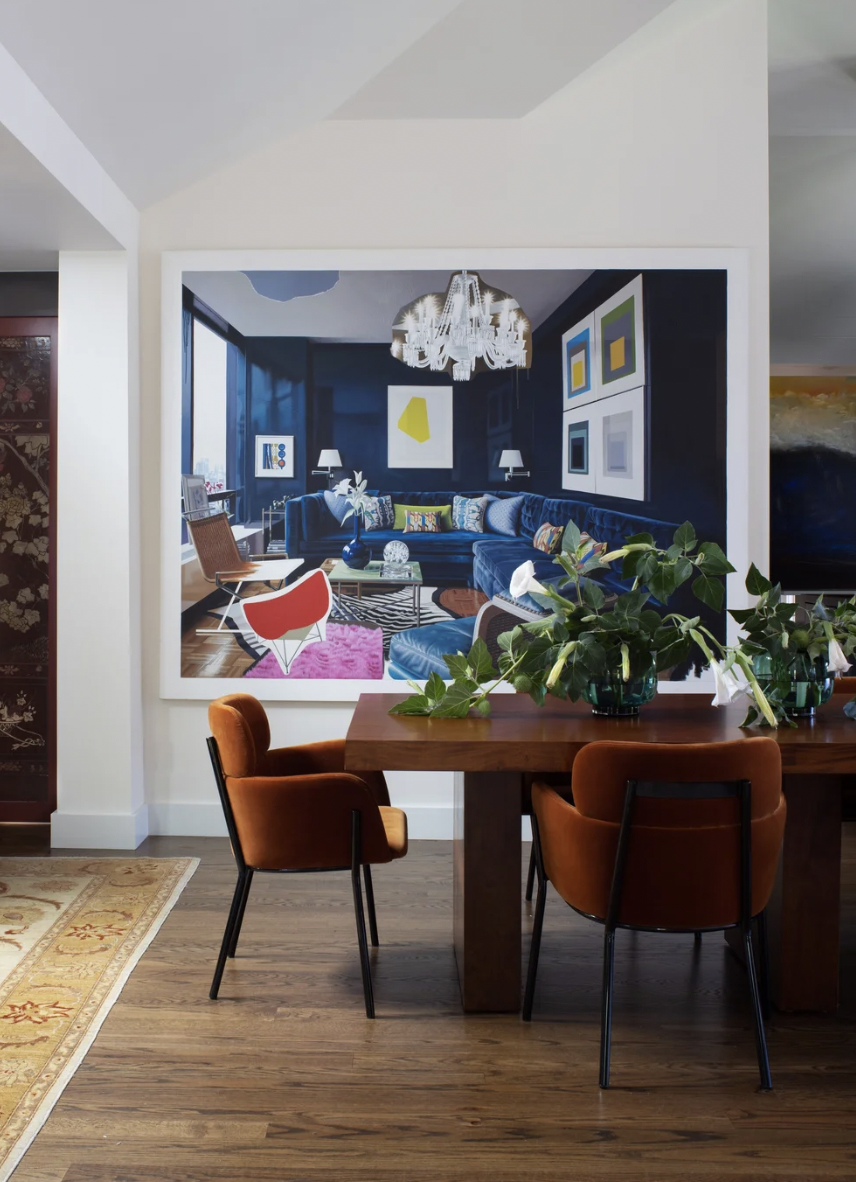
Nadia uses scale playfully and often. Over a round dining table, she designed a custom lantern with The Urban Electric Co. that is chocolatey black outside and orange inside, picking up the color of the drapes. In a foyer with tall industrial ceilings, she hung a leaded globe of cream glass about 30 to 36 inches across. When she works with scale, she considers how much space a piece takes up, its shape, its color, and its relationship to everything else in the room. A continuous, light-colored form can fill a space without dominating it.
From Tiffany glass to fabric: Nadia Watts's Gem Collection with Kravet
Nadia is the great-great-great-granddaughter of Charles Lewis Tiffany, a founder of Tiffany & Co., and the great-great-granddaughter of Louis Comfort Tiffany. As a young designer, she worked in American Decorative Arts at the Metropolitan Museum of Art on an exhibition about Laurelton Hall, Tiffany's country estate. Her Gem Collection with Kravet draws on the Neustadt Collection of Tiffany Glass in Long Island City, an archive of more than half a million pieces of Tiffany Studios glass that can't be reproduced today. She chose tactile techniques (cut velvet, bouclé, woven, and embroidered fabrics) because, like the glass, they make you want to touch them.
Nadia Watts is an interior designer based in Colorado who works with clients nationwide. Find more Think Like A Designer episodes and full show notes at SlowStyleHome.com/podcast.
Links Mentioned In The Episode
Nadia’s Website