This Is How You Train Your Eye. No Formula. Just Practice. — with Sophie von Oertzen Williamson
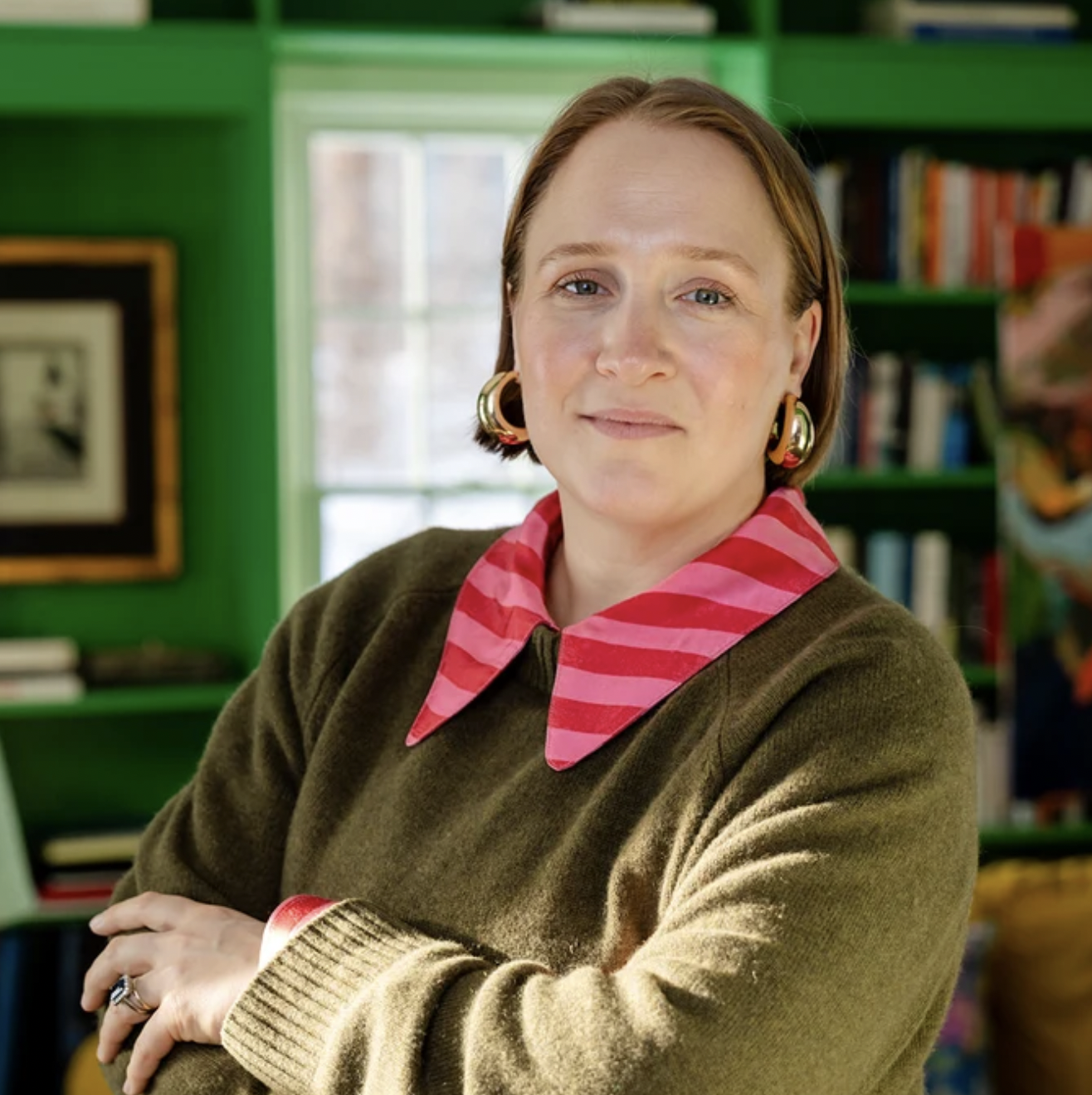
In this episode, I sit down with Sophie von Oertzen Williamson — an interior and textile designer, author of The Art of the Clash, now based in Connecticut — to look through a curated selection of her book. It started out being about pattern and color and ended up being about something bigger: why there's no formula for mastering the mix, only an eye you earn over time.
Sophie is 42, and she's the first to say that at 28, she didn't have the aesthetic she has today — not because she lacked talent, but because she hadn't lived those years yet. Her eye was built the same way her homes were: from Switzerland, where she was born, to Hamburg, to boarding school in the UK, to Singapore, to Shaker Heights, Ohio, to Connecticut now. Every one of those places shows up in her rooms — not as a theme, but as a record of an eye that's still being trained.
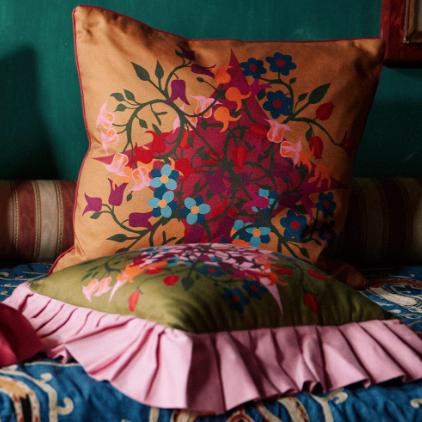
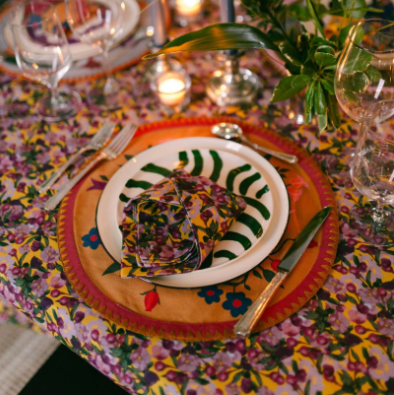
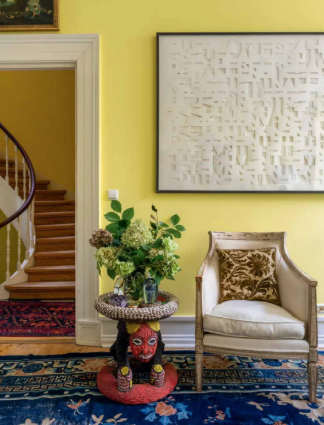
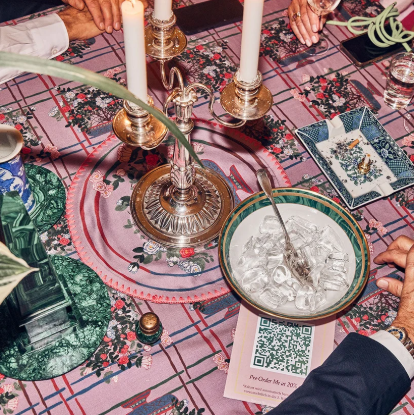
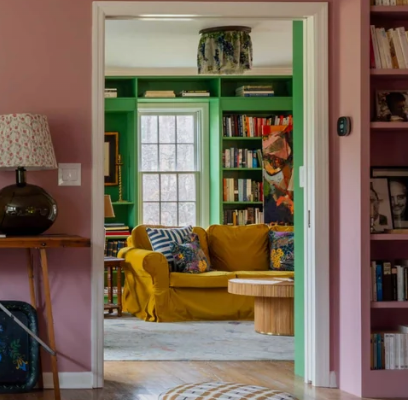
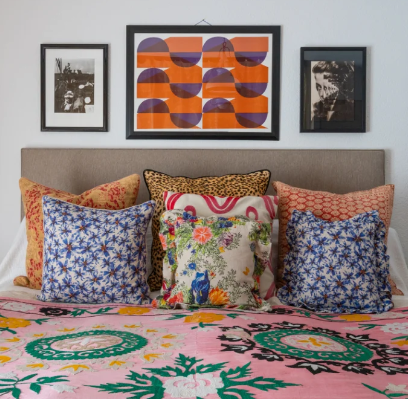
This episode walks through her book, photo by photo, with Sophie explaining her reasoning for each one — and none of the reasoning repeats. That's really the point: mastering the mix isn't a checklist you apply everywhere. It's a case-by-case judgment call, made by someone who's been making those calls for decades. The photos referenced throughout are available in the gallery on this page.
With your monthly subscription, you'll have access to exclusive, full length episodes, both audio and video. After signing up, you'll receive an email with easy instructions on how to add this premium show to your podcast player (Apple, Spotify, etc). And every week, you'll receive a link to the video version. As you may know, in the audio version, I make a strong effort to describe the designs we're looking at. But if you want to see everything for yourself, you'll want to click the link to the video version we'll be sending you.

This episode is sponsored by Aura House.
Elegant diffusers, clean, natural scents, free of toxins.
KEY TAKEAWAYS
Why there's no formula for mastering the mix
The most common mistake people make when trying to "mix pattern like a designer" is looking for a transferable rule. Sophie's own answer, when people ask how she got her style: at 28, she didn't have it. An eye isn't handed to you — it's trained, slowly, through years of trial and error, which is part of why she wrote a book about it rather than a checklist.
How your taste is shaped by everywhere you've lived
Sophie describes decorating as "an inherently political statement" — not in a partisan sense, but as a statement of who you are, built from your own history. Her homes carry Swiss-German baroque influence, UK coziness, and the color and vibrancy of Singapore, which she credits with waking up her creativity after growing up believing she "wasn't creative." Worth asking of your own home: how much of it reflects your own story, versus the nearest available facsimile of a finished home?
Mixing pattern without matching: a same-scale example
One of Sophie's favorite examples of mixing pattern without matching comes from a fellow designer's home she features in the book: palm-leaf wallpaper paired with an ikat-patterned bed and curtains. It works, Sophie explains, because the two patterns are the same scale and same color family — even though conventional pattern-mixing advice usually says to vary the scale.
Symmetry of placement, not symmetry of objects
In Sophie's own living room, two round side tables and a centered coffee table give the room structure — but as she points out, "there's where the symmetry stops. They're not the same tables." The balance comes from where things are placed, not from the furniture matching.
One finish that connects an entire floor of different rooms
In another home featured in the book, a single lacquered ceiling runs through the entire ground floor, tying together rooms that otherwise look nothing alike. Sophie calls it one of the cleverest ways she's ever seen of creating flow without making every room feel the same.
Reusing furniture across different homes and different meanings
The same painted bed shows up in two of Sophie's own houses — once in a pink room in Shaker Heights, later in an intensely green room in Connecticut, chosen so her daughter would have "a color that can grow with her." The same curtains appear in a dramatic blue bedroom and later in a calmer taupe one, reading completely differently depending on the walls around them. The lesson: the object doesn't carry a fixed style. Context does.
Curtains as the finishing detail — "an eye without an eyebrow"
Sophie's description of a room without window treatments: "looking at an eye without an eyebrow." Curtains are often the last thing added and the thing that makes a room feel resolved rather than almost-done.
Sophie von Oertzen Williamson is the author of The Art of the Clash, based in Connecticut. Find more Think Like A Designer episodes and full show notes at SlowStyleHome.com/podcast.
Links Mentioned In The Episode
Sophie’s Website
Sophie’s Book